

NORTHEAST ALABAMA– The Perseid meteor shower could give Northeast Alabama and Northwest Georgia one of the year’s most impressive celestial shows Wednesday night.
The annual shower will peak Wednesday, Aug. 12, into early Thursday, Aug. 13. A new moon will leave the sky almost completely free of moonlight.
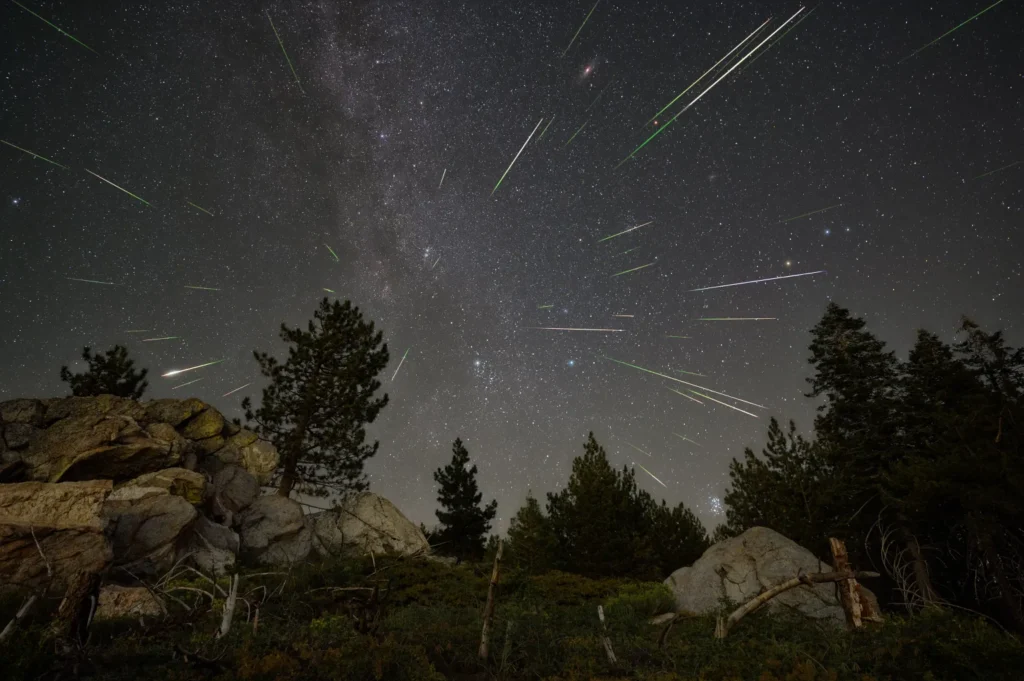
NASA says viewers could see 50 to 100 meteors per hour under ideal conditions. Those numbers require clear, extremely dark skies and an unobstructed view.
The American Meteor Society offers a more realistic estimate of 30 to 50 Perseids per hour from rural locations. Light pollution, clouds, trees, and the height of the meteor shower’s radiant can reduce the number seen.
Even so, the moonless sky gives 2026 viewers a major advantage.
During the 2024 Perseid meteor shower, moonlight reduced visibility. An 84%-full moon created even more interference in 2025.
This year, moonlight should not be a factor.
Best Time to Watch the Perseid Meteor Shower
A few Perseids may appear as early as 10 p.m. Wednesday. However, the best viewing should come after midnight and continue until the sky begins brightening Thursday morning.
NASA recommends looking generally toward the northeast once the sky becomes fully dark. That is where the constellation Perseus, the shower’s radiant point, will rise.
However, viewers should not stare only at Perseus. Meteors can streak across any portion of the sky.
A reclining lawn chair or blanket will provide a wider view than standing and looking in one direction. No telescope or binoculars are needed because those instruments show only a small section of sky.
NASA recommends allowing at least 20 to 30 minutes for the eyes to adjust to darkness. Looking at a bright cellphone screen, flashlight, or vehicle headlights can restart that adjustment process.
A dim red flashlight can help viewers move safely without destroying their night vision.
Local Weather Could Decide the Show
Cloud cover remains the greatest uncertainty for viewers across the WEIS listening area.
As of Sunday afternoon, National Weather Service forecasts called for partly cloudy conditions Wednesday night in Centre, Gadsden, Anniston, Fort Payne, and Rome.
Centre, Gadsden, and Anniston carried a 20% chance of thunderstorms before 1 a.m. Rome had a 30% evening storm chance, while Fort Payne’s forecast called for partly cloudy skies.
Those forecasts could still change before Wednesday. Viewers should check the latest local forecast and radar before leaving home.
Finding Dark Skies in the WEIS Listening Area
The region’s rural communities, ridges, farms, and open fields can offer much darker skies than downtown areas. However, viewers should use only property they own or have permission to enter.
Streetlights, security lights, illuminated signs, and vehicle headlights can hide the fainter Perseids. Moving even a few miles outside a city can produce a noticeable improvement.
People planning to use a public park should verify its nighttime rules beforehand. Day-use areas and trails at Cheaha State Park and DeSoto State Park close at sunset. Overnight guests may use authorized camping or lodging areas, subject to park rules.
The National Park Service says Little River Canyon National Preserve is open only during daylight hours. It should not be used as an unauthorized nighttime viewing location.
Other legal options include a reserved campsite or private rural property with an open view. Arriving before dark allows viewers to choose a safe location without navigating unfamiliar ground at night.
Tiny Comet Particles Create the Light Show
Despite their nickname, “shooting stars” are not stars.
The Perseids occur when Earth moves through dust and debris left behind by Comet 109P/Swift-Tuttle. Most particles are no larger than grains of sand or small pebbles.
They enter Earth’s atmosphere at about 37 miles per second, or nearly 133,000 mph. Their passage heats and excites the surrounding air, producing the brief streaks seen from the ground.
Most Perseid particles disintegrate high in the atmosphere. NASA says people should not expect to find meteorites on the ground after the shower because comet material is usually too fragile to survive.
Swift-Tuttle completes one orbit around the sun about every 133 years. The comet last passed through the inner solar system in 1992.
Its nucleus measures about 16 miles across. That makes Swift-Tuttle an unusually large comet, although the particles producing most Perseids are tiny.
Observers have recorded the Perseids for more than 2,000 years, making them one of humanity’s oldest documented meteor showers.
Fireballs and Colorful Trails
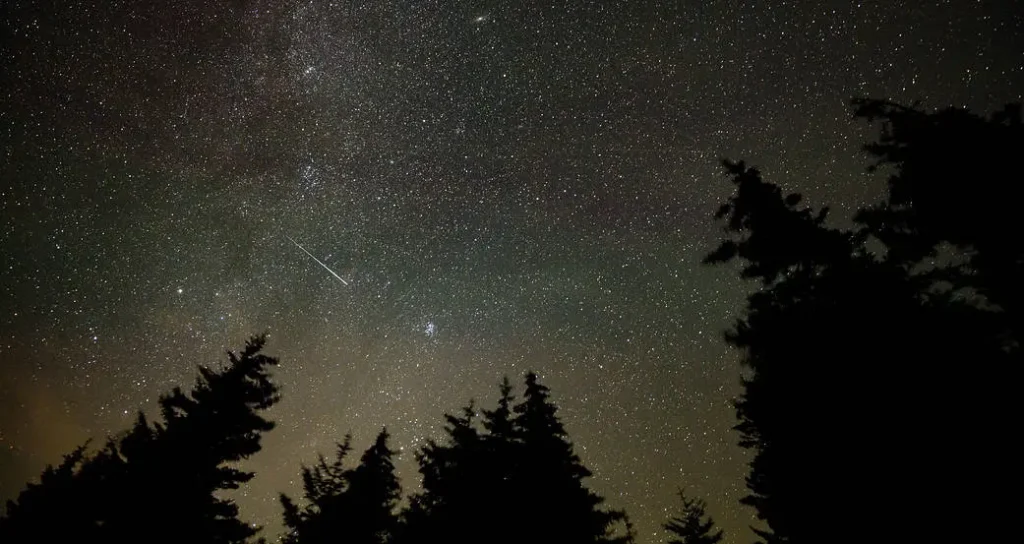
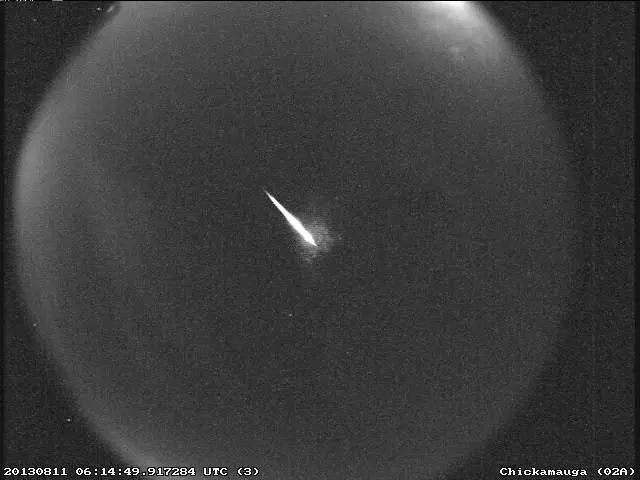
The Perseids are especially popular because they frequently produce fireballs. These exceptionally bright meteors come from larger pieces of comet material.
Fireballs can remain visible longer than ordinary meteors. Some also leave glowing trails, called persistent trains, that linger briefly after the meteor disappears.
Colors can range from red and orange to yellow, green, and blue-white. However, the brightest fireballs are the most likely to show noticeable color to the human eye.
NASA Ames Research Center says vaporized sodium can produce yellow light, nickel can appear green, and magnesium can appear blue-white. Excited gases in Earth’s atmosphere also contribute to the colors.
A meteor’s speed and brightness affect what viewers see. Cameras can sometimes record colors that are difficult for the eye to detect during a meteor’s brief appearance.
Photographs also may make a shower look more crowded than it appears in real time. Many dramatic meteor-shower pictures combine several exposures or use a long exposure to collect multiple streaks.
How to Photograph the Perseids
Photographing a meteor requires patience because there is no way to predict exactly where the next streak will appear.
NASA’s meteor photography guide recommends using a tripod, wide-angle lens, and a camera with manual controls. A wide lens captures more sky and increases the chance of catching a meteor.
Photographers should focus manually on a distant star, use a remote shutter release or timer, and experiment with exposure settings. Turning down the camera screen’s brightness will help preserve night vision.
A meteor may last less than a second, so photographers should expect to take many empty frames before capturing one.
NASA Plans Live Alabama Watch Party
Anyone blocked by clouds can still follow the shower online.
NASA will begin a live Perseid watch party at 11 p.m. Central Wednesday. The broadcast will originate from the Automated Lunar and Meteor Observatory at Marshall Space Flight Center in Huntsville.
NASA experts will answer questions and share live views from meteor cameras. The broadcast also is expected to include views from the International Space Station.
The Perseids remain active through late August. Therefore, people who miss the peak may still see several meteors on clear nights before or after Wednesday.



You must be logged in to post a comment.