
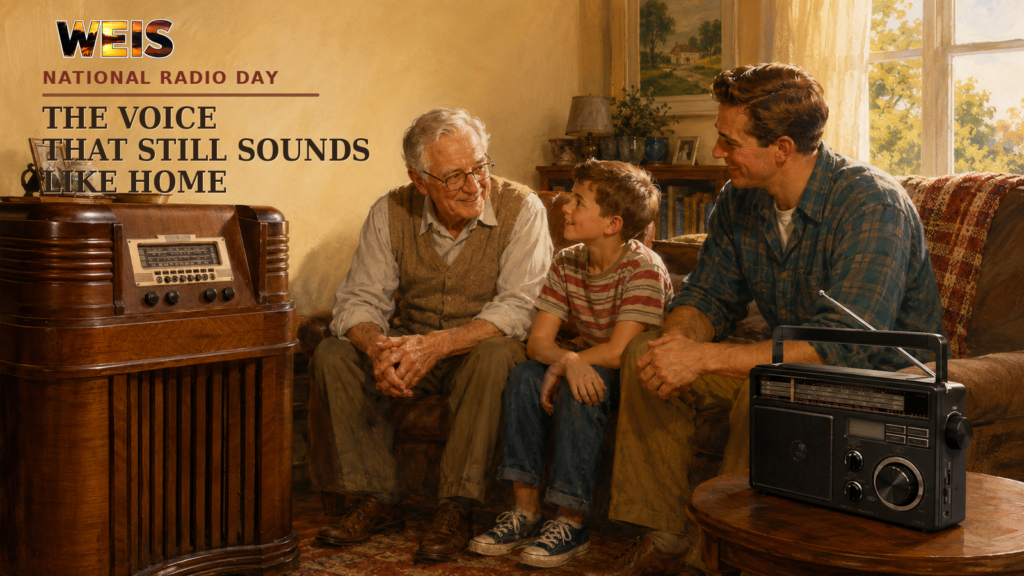
CENTRE– National Radio Day arrives each Aug. 20 to honor a medium that has carried elections, wars, ballgames, weather warnings, sermons, comedy, heartbreak, and hit songs through the air for more than a century.
Radio has no screen. That may be its greatest trick.
It has made some of the clearest pictures in American life: a family gathered around a wooden cabinet, a batter stepping into the box, a storm moving toward a familiar road, or a singer standing alone beneath a studio light. Radio supplies the sound, then invites the listener to complete the scene.
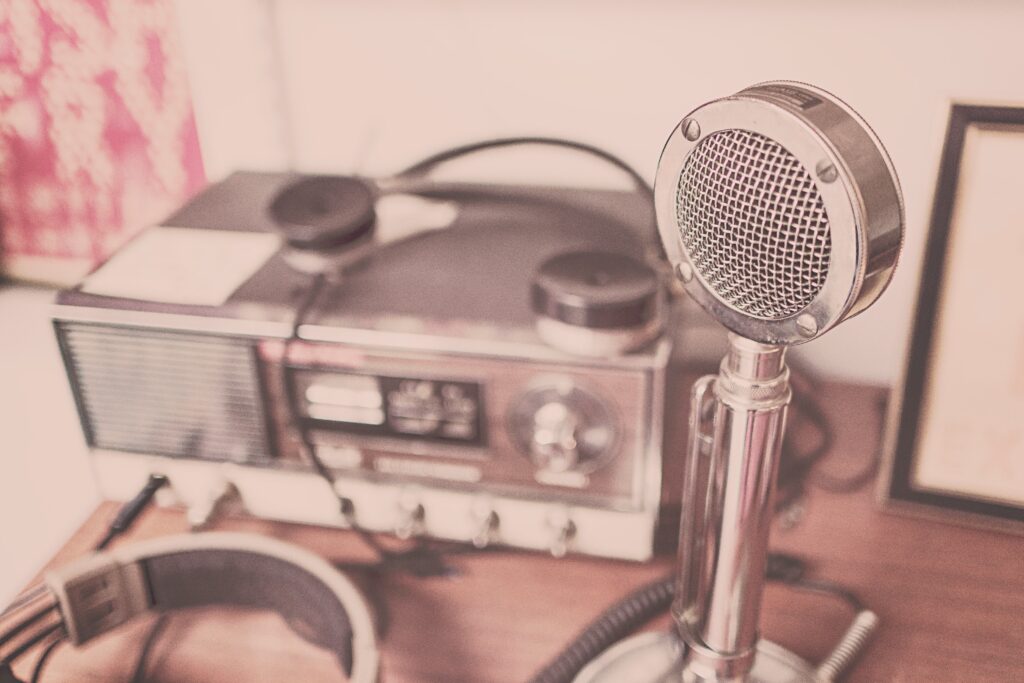
That partnership creates a personal bond few other forms of media can match. A radio voice rides beside you in the car, keeps you company in the kitchen, follows you into the workshop, and sits with you through the quietest part of the night. At its best, radio can speak to thousands of people without sounding as though it is talking to a crowd.
Even the story behind National Radio Day comes with a little static. Organizers say the observance has been celebrated since the early 1990s, but there is no clear record of who created it. One possible reason for the date is that Detroit station 8MK, which later became WWJ, began broadcasting on Aug. 20, 1920.
The uncertainty is fitting. Almost every famous “first” in radio comes with a footnote, a rival claim, or a spirited debate among people who know the business well.
Radio Was Never a One-Person Invention
History books love a single inventor and a single flash of genius. Radio refuses to cooperate.
It developed more like a relay race. Scientists, engineers, inventors, businesspeople, operators, and broadcasters carried the idea forward one discovery at a time.
James Clerk Maxwell laid the scientific foundation in 1864 when his work predicted electromagnetic waves traveling at the speed of light. Heinrich Hertz confirmed the existence of those waves in experiments during the 1880s, according to a history of electromagnetic science from the National Institute of Standards and Technology.
Guglielmo Marconi then turned theory into a practical system for wireless communication. In 1895, he transmitted radio signals across several kilometers, and he continued extending their reach. The Nobel Prize organization notes that Marconi and Karl Ferdinand Braun shared the 1909 Nobel Prize in Physics for their contributions to wireless telegraphy.
At first, “wireless” did not carry a friendly announcer or a fiddle tune. It mostly carried dots and dashes. It was telegraphy without the wire.
Reginald Fessenden helped give radio a human voice. Smithsonian records credit him with broadcasting speech and music on Christmas Eve in 1906. Lee de Forest’s Audion vacuum tube soon helped make signals easier to detect and amplify.
So, who invented radio? The most accurate answer is not one name. Maxwell supplied crucial theory. Hertz proved the waves existed. Marconi made wireless signaling practical over great distances. Fessenden, de Forest, Armstrong, and many others helped turn it into the medium people recognize today.
Radio was not simply invented. It was assembled, improved, argued over, patented, regulated, and finally invited into the house.
Before Radio Entertained, It Helped Save Lives
The lifesaving value of wireless communication became clear before broadcasting became a household business.
When the Titanic struck an iceberg in April 1912, its wireless operators sent distress calls that reached the Carpathia. The rescue ship changed course and picked up hundreds of survivors. The disaster exposed serious weaknesses in early maritime radio practices, including stations that were not staffed around the clock.
Congress passed the Radio Act of 1912 later that year. An FCC history of the law says it greatly expanded federal oversight and established new emergency procedures, including continuous radio service aboard ocean-going ships.
That is an important part of radio’s story. Long before a disc jockey took requests, the medium had already proven that a signal received at the right moment could change the outcome of an emergency.
Public service was not added to radio later. It was present near the beginning.
The Race to Become Radio’s “First” Station
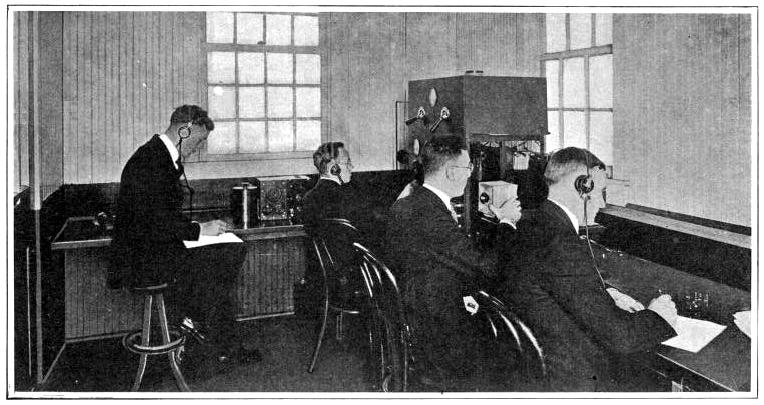
By 1920, experimenters had proven that radio could transmit voices and music. The next question was whether people would gather around receivers often enough to turn experiments into regular programming.
Detroit station 8MK began broadcasting on Aug. 20, 1920, the date now associated with National Radio Day. The station eventually became WWJ.
Then came one of radio’s signature moments. On Nov. 2, 1920, Pittsburgh station KDKA broadcast returns from the presidential election between Warren G. Harding and James M. Cox. A Library of Congress history describes KDKA as one of the country’s first commercial radio stations and notes that it remains on the air.
KDKA is often called America’s first commercial station. Other stations have strong claims involving earlier experiments, scheduled programs, news reports, or licensing dates. The answer depends on what someone means by “first,” and serious radio historians know better than to squeeze a complicated beginning into one easy slogan.
Even the word “broadcast” came from somewhere else. Farmers used it to describe scattering seed widely across a field. Early radio adopted the word because one signal could reach anyone with a receiver instead of traveling to only one destination.
When Radio Learned to Call the Game
Radio quickly found uses that its pioneers could scarcely have scripted. On Aug. 5, 1921, KDKA’s Harold Arlin called a Pittsburgh Pirates game against the Philadelphia Phillies. According to the National Baseball Hall of Fame, Arlin used a converted telephone as a microphone while the Pirates won 8-5.
No recording of that game is known to survive. Arlin was inventing the language of play-by-play while the action unfolded. He had no model, no broadcast partner, no instant replay, and no audience research telling him when listeners might tune away.
He simply had a game, a microphone, and the responsibility to help people see with their ears.
When America Gathered Around the Dial
Radio grew quickly during the 1920s and became the central electronic medium of American life during the 1930s and 1940s.
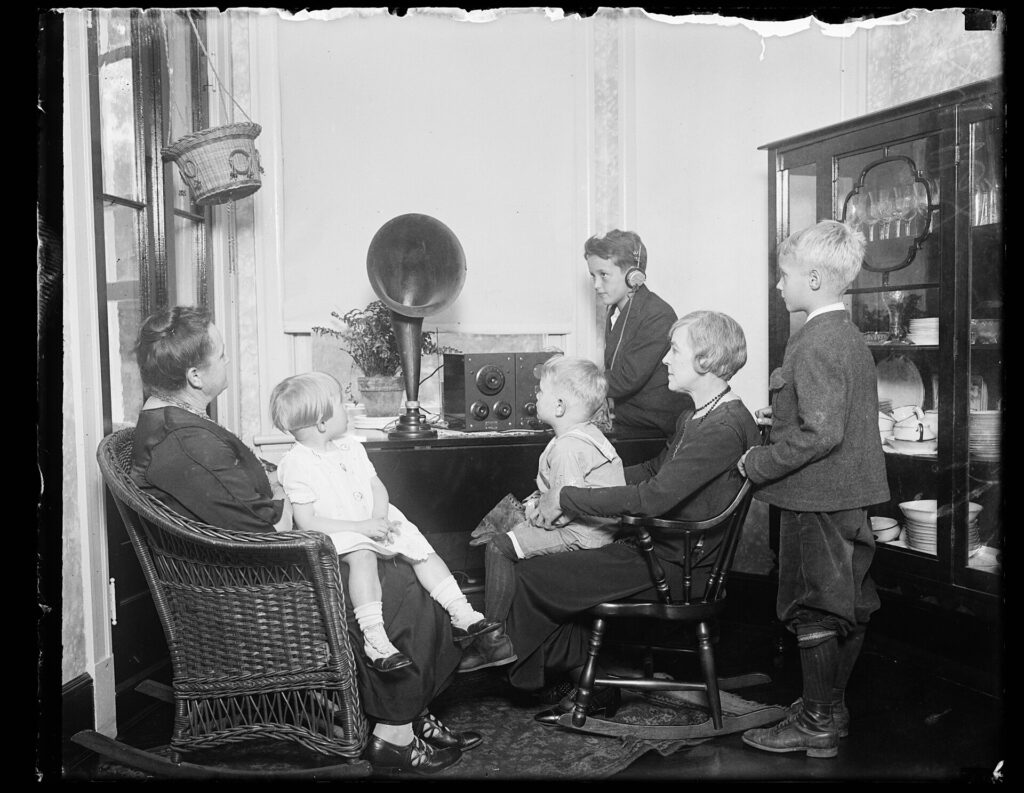
Families arranged furniture around the radio. Program schedules shaped evening routines. Listeners heard comedians, detectives, cowboys, quiz shows, live orchestras, church services, children’s adventures, news reports, and serial dramas.
Radio even gave the “soap opera” its name. The Smithsonian Institution explains that soap companies sponsored many of the continuing daytime dramas that began on radio before moving to television.
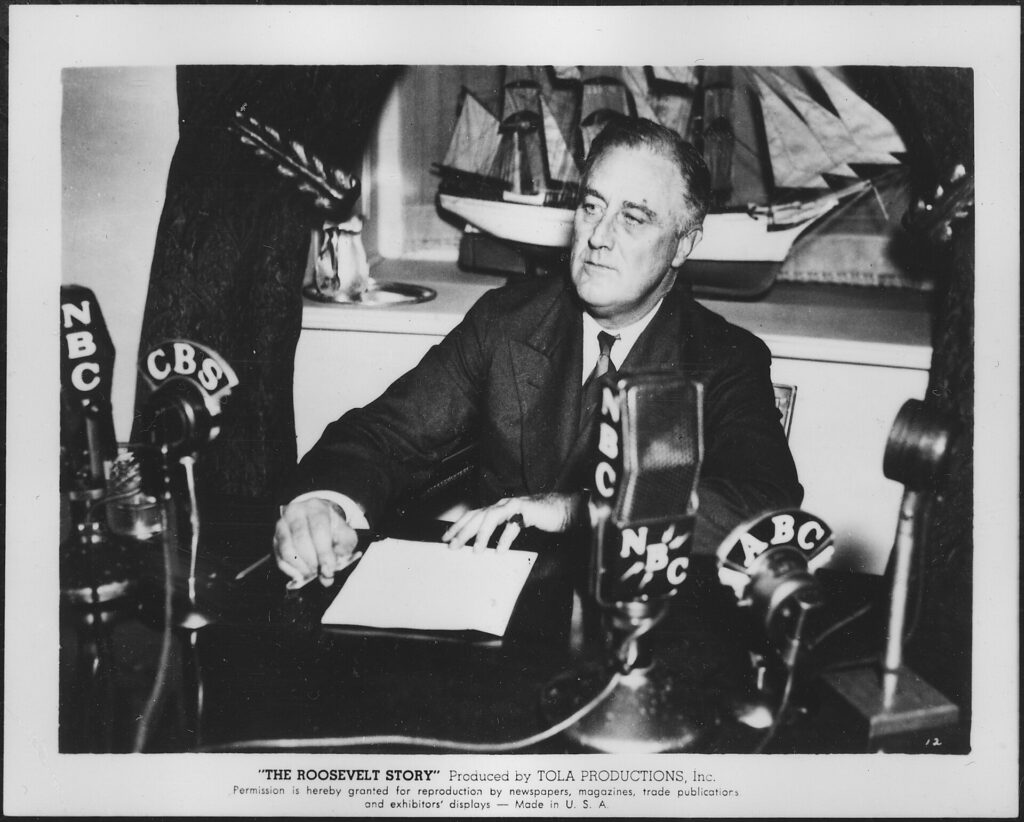
The medium also changed politics. On March 12, 1933, President Franklin D. Roosevelt delivered the first of what became known as his fireside chats. Speaking during the banking crisis, Roosevelt used plain language and a calm tone to address Americans directly.
The Franklin D. Roosevelt Presidential Library describes how he spoke with the public instead of at it. That distinction remains one of radio’s deepest lessons. The power was not only in reaching a national audience. It was in making each listener feel personally addressed.
Radio could also blur the line between imagination and reality. Orson Welles’ 1938 adaptation of “The War of the Worlds” used realistic news bulletins to tell the story of a Martian invasion.
Some listeners were frightened, but the familiar tale of an entire nation stampeding in panic grew far beyond the evidence. The National Archives says the reported “mass hysteria” was likely amplified by media hype. It remains a wonderful radio story, but the myth became larger than the panic itself.
During World War II, radio brought presidential addresses, battlefield reporting, public-service appeals, entertainment, and voices from overseas into American homes. People did not have to wait for tomorrow’s newspaper to learn that history had turned. They could hear it turning.
Television Arrived, and Radio Got Moving
When television entered American living rooms in the 1950s, many of radio’s network comedies and dramas followed. It looked, for a moment, as if the older medium might become a victim of the new one.
Instead, radio changed jobs.
Stations leaned harder into music, local news, live personalities, weather, sports, call-in programs, and community service. Radio stopped trying to remain the theater in the living room and became the companion that could travel everywhere else.
Technology helped it make that move. Edwin Howard Armstrong developed wide-band frequency modulation, or FM, by 1933. His system greatly reduced static and improved sound quality, according to the National Inventors Hall of Fame.
The difference between AM and FM is in the name. AM carries audio by varying, or modulating, the amplitude of a radio wave. FM varies the frequency. AM signals can travel remarkable distances, especially after dark under the right atmospheric conditions. FM generally offers cleaner sound but behaves more like a line-of-sight service.
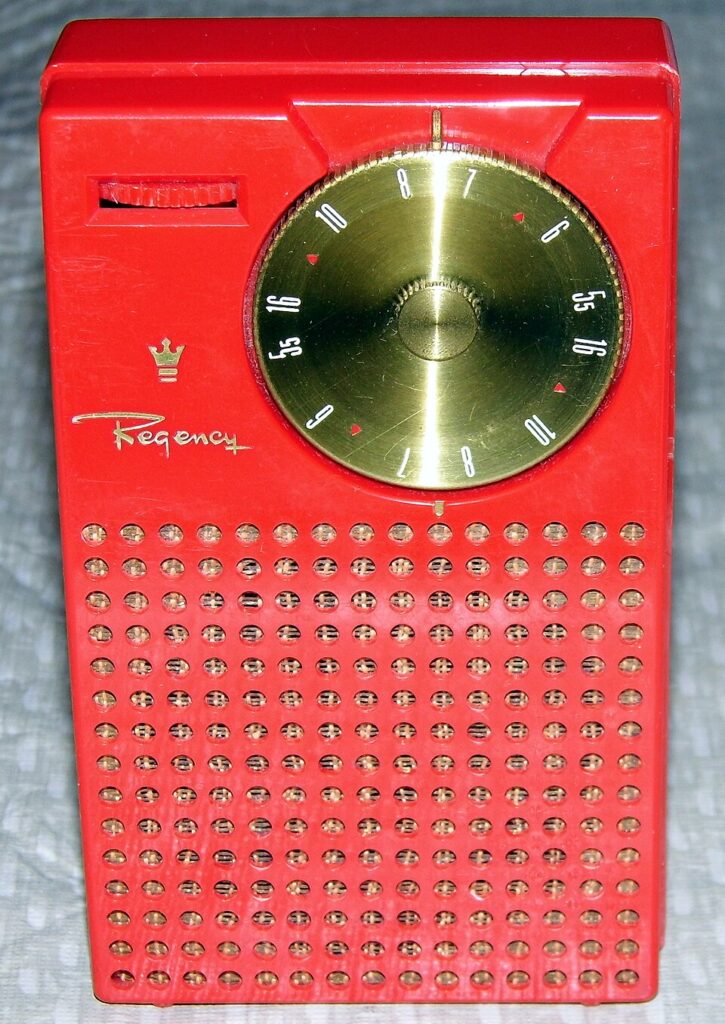
Then the radio itself became portable. The Regency TR-1 arrived in 1954 as the first commercially produced pocket transistor radio. The Smithsonian’s collection notes that it contained four transistors, received AM stations, and cost about $50.
That little radio represented a huge cultural change. Listening no longer belonged to the whole household. A teenager could carry music to the porch, the beach, the ballfield, or beneath the covers after bedtime. Car radios turned the daily commute into listening time. The disc jockey became a guide, storyteller, and familiar friend.
Television had taken the pictures. Radio answered with mobility, personality, and speed.
The Medium That Makes the Listener Part of the Production
Radio asks more of its audience than people sometimes realize.
A television camera shows the room. A radio broadcaster must build it. The microphone captures words, music, crowd noise, and silence, but the listener’s imagination handles the lighting, scenery, faces, and movement.
That is why great radio sports calls remain vivid decades later. The announcer gives the count, the formation, the clock, the crowd, the tension, and the flight of the ball. The listener creates the stadium.
It is also why radio voices become so familiar. A listener may never meet the person behind the microphone, yet recognize the laugh, the pause before serious news, the excitement after a touchdown, or the change in tone when dangerous weather approaches.
Radio professionals often talk about addressing one listener, not an audience. That is more than a performance technique. It is the heart of the medium. Radio may be mass communication, but its best work feels one-to-one.
There is another quality radio still owns: the shared live moment. A song can be streamed whenever someone wants it. A podcast can wait. Radio says this is happening now, and your neighbors are hearing it too.
That sense of “now” can turn a routine morning into a community conversation. It can also become very important when routine disappears.
Why Radio Still Matters in an On-Demand World
Every generation announces that some new technology will finish radio. So far, radio has responded by finding another speaker.
It moved from crystal sets to cabinet receivers, from vacuum tubes to transistors, and from AM to FM stereo. Today, the same local station may reach listeners through a traditional receiver, a vehicle dashboard, a website stream, a mobile device, or a smart speaker.
The delivery system keeps changing. The relationship remains recognizable.
Radio also remains a major part of American listening. Nielsen’s report on fourth-quarter 2025 audio habits found that Americans averaged 3 hours and 54 minutes of daily audio consumption. Within ad-supported audio, listeners spent 61% of their time with radio, compared with 21% for podcasts, 15% for streaming music, and 3% for satellite radio.
Those numbers do not describe a museum piece. They describe a medium that has learned to share the dashboard without surrendering it.
Radio’s staying power comes partly from its simplicity. It does not require the listener to choose every song, build every playlist, or stare at another screen. People sometimes want surprise. At other moments, they want a trusted voice to tell them what matters. Often, they simply want company.
When the Weather Turns, Radio Becomes a Lifeline
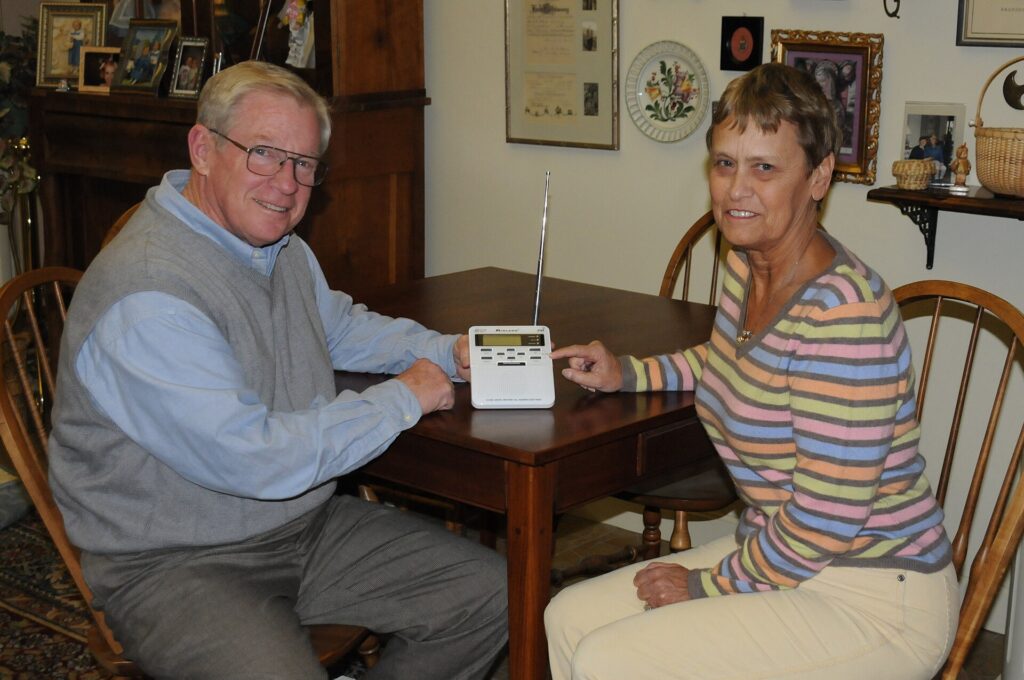
Radio’s importance becomes clearest when conditions are at their worst.
The NOAA Weather Radio All Hazards network broadcasts official watches, warnings, forecasts, and other emergency information around the clock. Its more than 1,000 transmitters cover all 50 states and several U.S. territories.
Commercial and noncommercial stations work with the Emergency Alert System, local officials, emergency managers, schools, and public-safety agencies to move urgent information quickly. FEMA still includes a battery-powered or hand-crank radio in its recommended emergency supply kit.
When electricity fails, cellular networks become overloaded, or internet access disappears, a battery-powered radio can keep receiving. Its simple design becomes its strength.
Local broadcasters add something else: knowledge of place. A national warning may identify a county. A local voice can explain which road is flooding, where a shelter has opened, when a school will dismiss, or what listeners in a particular community need to do next.
In that moment, radio is not background sound. It is part of the public-safety system.
Local Radio Still Knows the Way Home
The FCC says a broadcaster has a fundamental duty to provide programming that serves the needs and interests of its community. That principle appears in a 2024 FCC order on broadcasters’ local-service responsibilities.
That language is formal. The human meaning is simple: know the community, answer when it needs you, and never forget who the station is there to serve.
Local radio reports the council vote, the road closure, the school announcement, the Friday night score, the severe thunderstorm warning, the benefit for a neighbor, and the passing of someone whose name matters to the community.
A streaming service can make an excellent guess about the next song someone might enjoy. It cannot explain why fire trucks just went past the house. It cannot recognize a familiar caller’s voice, congratulate the hometown team, interview the new police chief, or tell a family where to find help after a storm.
That is radio’s lasting advantage. It is not simply local because its tower stands nearby. It is local because its people are nearby.
A Personal Note from WEIS
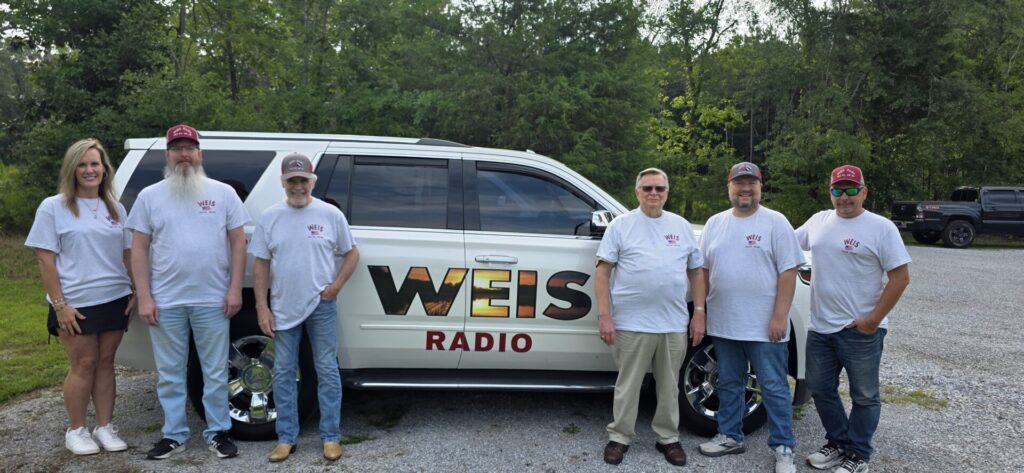
WEIS Radio has celebrated National Radio Day before, but the occasion never feels routine to us. Since 1961, WEIS has had the privilege of serving Cherokee County and the surrounding area through news, weather, music, community information, and sports.
From all of us at WEIS, we are proud to be part of your community. We honestly believe we have the best job in the world. We love entertaining you and keeping you informed. We also treasure celebrating the good days with you and being there when the news is difficult or the weather turns dangerous.
We hope you continue to enjoy the W, E, I, and S of WEIS: Weather, Entertainment, Information, and Sports. Those four words describe what we do, but they do not fully explain why we love doing it.
In the long history of radio, we are proud to still be going strong on 100.5 FM and 990 AM. Yet the best part of this work is not the studio, the microphone, the transmitter, or even the excitement of breaking news and live sports. The best part is interacting with you, our loyal listeners.
Thank you for inviting us into your homes, vehicles, businesses, workplaces, ballgames, and daily routines. We also appreciate every call, message, and story you share. Your trust reminds us that radio is never merely a signal traveling through the air.
At its very best, radio is a neighbor speaking to a neighbor — and an entire community listening together.

You must be logged in to post a comment.