

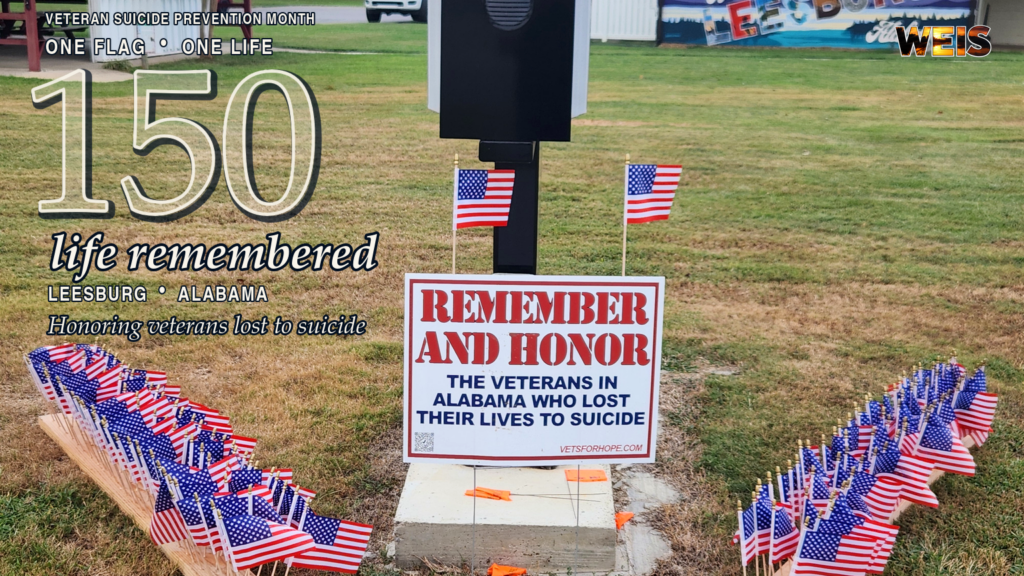
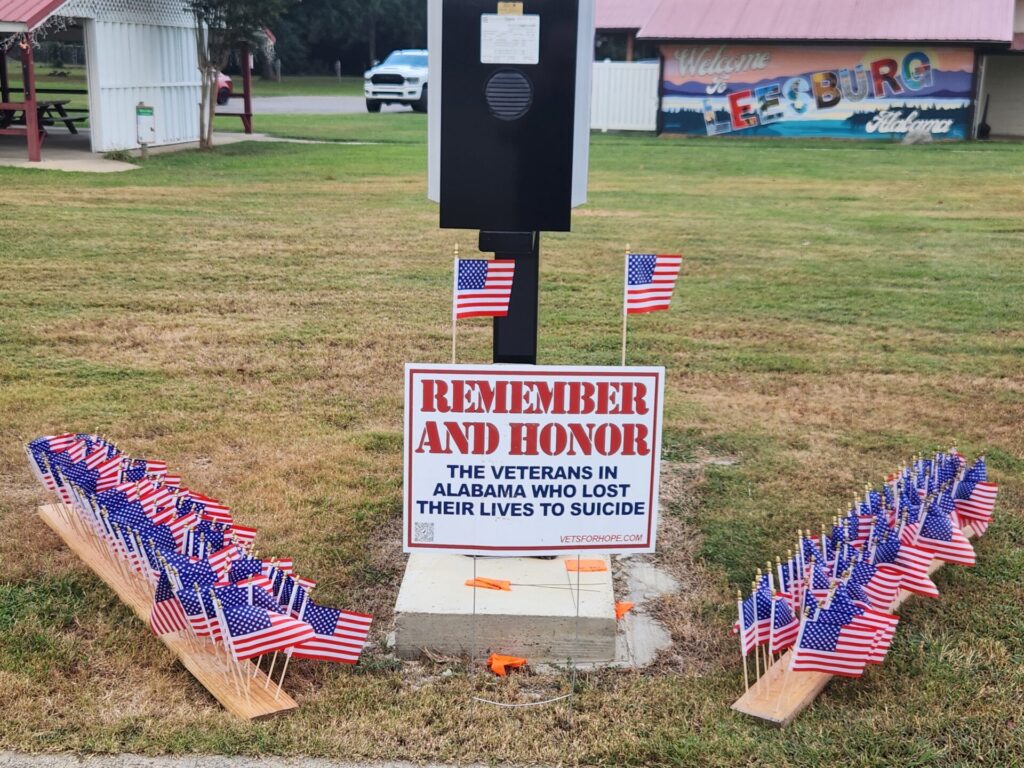
LEESBURG- The Town of Leesburg has placed 150 American flags in a veteran suicide awareness display during September. Each flag represents an Alabama veteran lost to suicide and a family forever changed by that loss.
The flags surround a sign asking the community to “remember and honor” the veterans whose lives were lost. Set against the familiar “Welcome to Leesburg” mural, the display brings an urgent statewide issue into clear local view.
The number aligns with Alabama’s 2026 Operation We Remember observance, which uses 150 flags to honor 150 Alabama veterans who died by suicide in 2024. Similar displays across the state are intended to remember those veterans while encouraging others to recognize warning signs and connect people in crisis with help.
Leesburg’s tribute arrives during National Suicide Prevention Month. It serves as both a memorial and a public reminder: Suicide prevention does not belong only to health care providers. Friends, relatives, fellow veterans, employers, churches and neighbors can all help someone reach support.
A Statewide Loss Reflected Close to Home
The 150 flags represent individual lives, not an abstract total. They also reflect the continuing suicide risk faced by veterans in communities across Alabama.
The latest detailed U.S. Department of Veterans Affairs annual report covers deaths recorded in 2023. It found that 6,398 veterans died by suicide nationwide that year, an average of 17.5 each day. In Alabama, the VA recorded 122 veteran suicide deaths in 2023, with a rate of 35.7 deaths per 100,000 veterans.
The current Alabama campaign reflects the following year’s statewide total of 150. Although the reporting periods differ, both figures show why continued local awareness matters.
The VA says suicide prevention depends partly on strengthening protective factors. Those include supportive relationships, access to physical and mental health care, healthy coping skills and a sense of connection. At the same time, difficult events such as job loss, divorce, serious illness or the death of a loved one can increase risk.
Recognizing the Warning Signs
A person in crisis may not always say directly that help is needed. However, changes in words, mood or behavior can signal that something is wrong.
According to the Veterans Crisis Line, warning signs may include persistent sadness, hopelessness, agitation, sleeplessness, extreme mood changes, withdrawal from family and friends, increased use of alcohol or drugs, reckless behavior, giving away possessions or putting personal affairs in order.
More urgent signs include talking about suicide or death, looking for a way to die or engaging in self-destructive behavior. Anyone who believes a person is in immediate danger should call 911 or go to the nearest emergency room.
The VA also encourages people to ask directly whether someone is thinking about suicide. Asking the question does not increase suicide risk. Instead, a calm and nonjudgmental conversation can give someone permission to speak honestly and accept help.
Family members and friends do not need to solve every problem. They can listen, stay with the person when it is safe to do so and help make a call to a crisis counselor or health care provider.
Creating Time and Distance During a Crisis
The VA reported that firearms were involved in 73.3% of veteran suicide deaths in 2023. For that reason, safe storage can be an important part of a family’s prevention plan.
The goal is to create time and distance between a person in crisis and a potentially lethal means of self-harm. Options may include locking firearms and medications, storing ammunition separately or arranging voluntary temporary storage away from the home.
Alabama’s S.A.F.E.R. Together program connects firearm owners with participating businesses that offer voluntary, temporary and confidential storage. The program is designed to give families another option during a difficult period while respecting lawful firearm ownership.
Help Is Available Now
Veterans do not have to be enrolled in VA health care to contact the Veterans Crisis Line. The service is available around the clock to veterans, service members, National Guard and Reserve members, and those who support them.
- Call 988, then press 1 to reach the Veterans Crisis Line.
- Text 838255 to connect with a crisis responder.
- Chat online at VeteransCrisisLine.net.
- Call 911 or go to the nearest emergency room when there is immediate danger.
Local veterans may also seek mental health care at the Rainbow City VA Clinic at 206 Rescia Avenue in Gadsden. The clinic is open Monday through Friday from 7:30 a.m. until 4:30 p.m. and provides mental health services along with primary and specialty care.
The Birmingham VA Health Care System’s behavioral health call center can be reached at 205-933-8101, extension 335508. Its suicide prevention team can also help veterans and families connect with care.
In addition, eligible veterans may receive free emergency suicide care at a VA or community emergency facility under the COMPACT Act, even if they are not enrolled in VA health care. Eligibility and coverage rules apply, but the law is intended to remove a major barrier when urgent help is needed.
Leesburg’s flags honor veterans who can no longer be reached. Their message to the living is equally important: Notice the warning signs, begin the conversation and help a veteran connect with support before a crisis becomes a loss.


You must be logged in to post a comment.