

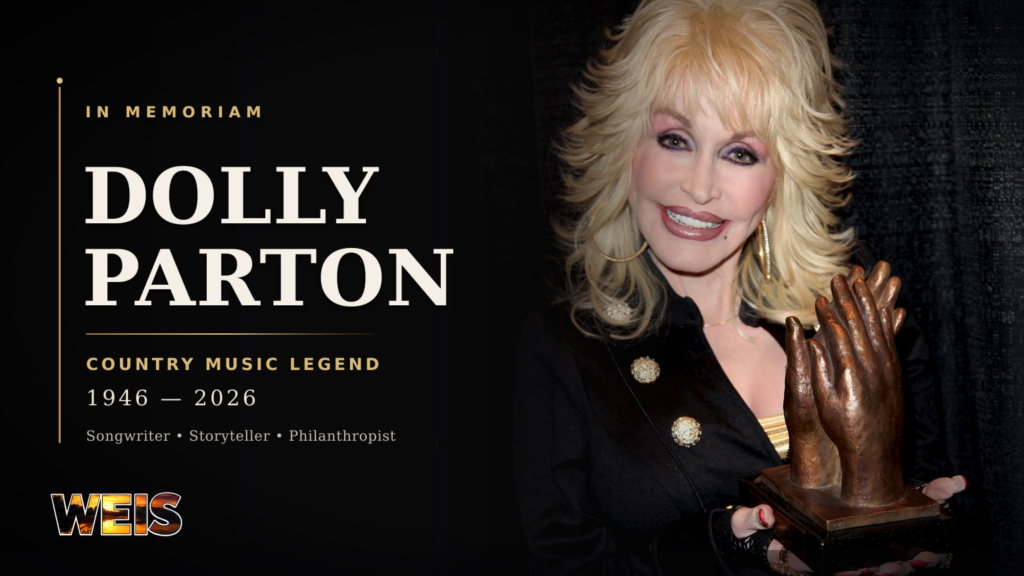
NASHVILLE, Tenn.– Dolly Parton, the daughter of the Great Smoky Mountains whose songwriting, soaring voice, radiant personality, and generous heart made her a country music legend and one of America’s most beloved cultural figures, died Tuesday. She was 80.
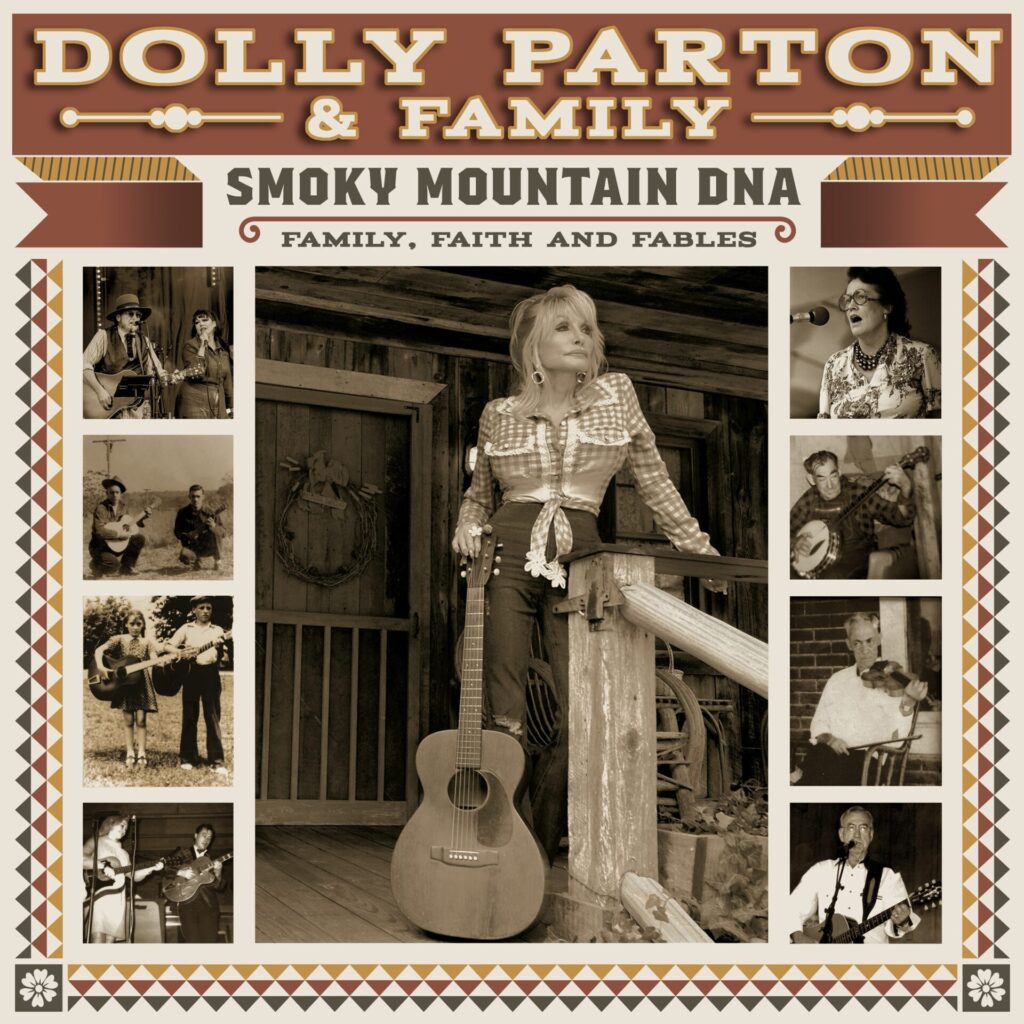
Parton’s nephew and longtime head of security, Bryan Seaver, announced her death in a video posted to her official social media account. Speaking for the Parton and Owens families, Seaver said his aunt had asked him years earlier to make the announcement when the time came.
Seaver identified her by her full married name, Dolly Rebecca Parton Dean, and remembered the woman her family knew as a sister, aunt, grandmother figure, and great-grandmother figure. He said the family found comfort in its faith and believed Parton was “in the arms of Jesus,” reunited with her husband, Carl Dean, and other loved ones who died before her.
No cause of death was announced.
For WEIS Radio, a station rooted in country music and the communities that music serves, Parton’s death carries the weight of losing one of the voices that helped define the format itself.
Her records belong to the history of country radio: the urgent plea of “Jolene,” the homespun dignity of “Coat of Many Colors,” the working woman’s anthem “9 to 5,” and the graceful farewell of “I Will Always Love You.” Generations heard those songs through dashboard speakers, kitchen radios, workplace receivers, and small-town stations where country music remains more than entertainment. It is memory, family, faith, heartbreak, humor, and home.
Parton embodied all of it.
From a Mountain Cabin to the Grand Ole Opry
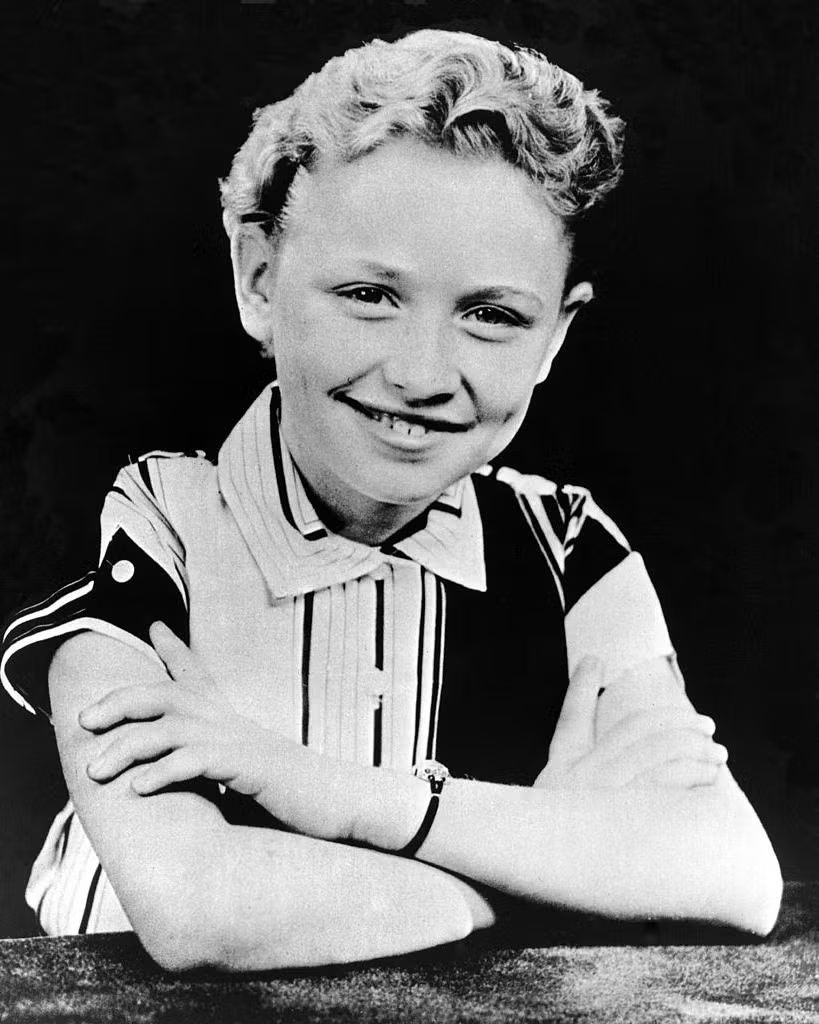
Dolly Rebecca Parton was born Jan. 19, 1946, in Locust Ridge, Tennessee, the fourth of 12 children born to Robert Lee Parton Sr. and Avie Lee Owens Parton.
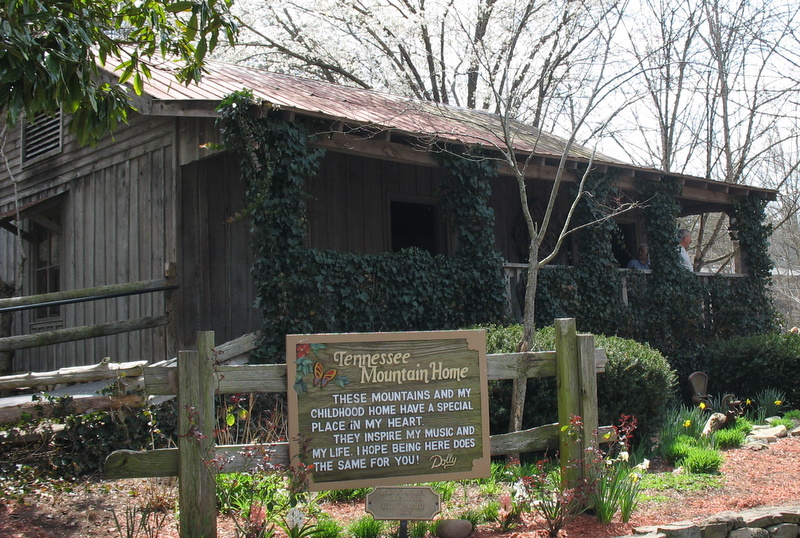
Her family lived in a small cabin near the Great Smoky Mountains and struggled financially. Her father farmed and worked construction jobs, while her mother filled the home with old ballads, church songs, Appalachian stories, and the kind of oral tradition that would later shape her daughter’s songwriting.
Parton never hid the poverty of her childhood. Instead, she turned it into art.
“Coat of Many Colors” told the story of her mother sewing a coat from scraps of fabric and teaching her that love could make something valuable even when the world saw only poverty. “My Tennessee Mountain Home” preserved the landscape and spirit of the mountains. Other songs carried the voices of working women, abandoned women, faithful families, dreamers, and people trying to hold onto dignity through hardship.
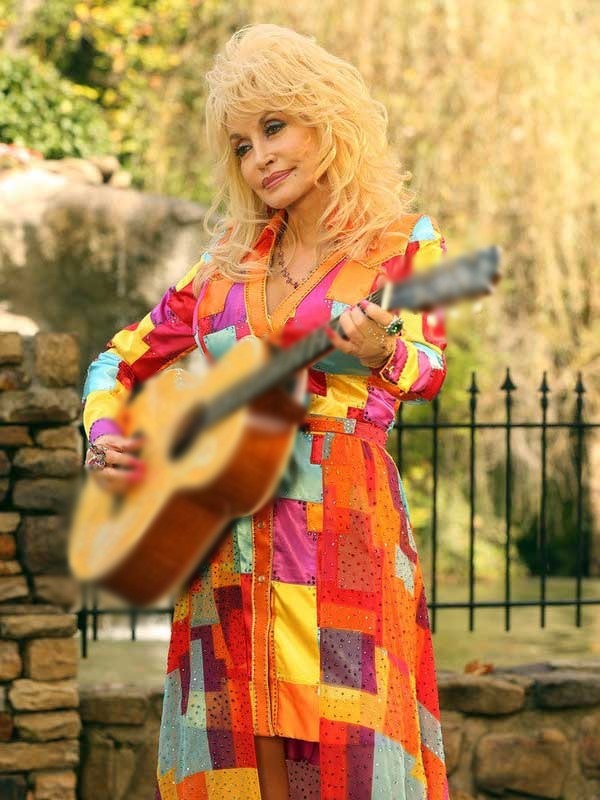
Music arrived early. Parton sang in church, began writing songs as a child, performed on Knoxville radio and television, and received help from her uncle and musical mentor, Bill Owens.
At 13, she made her debut at the Grand Ole Opry, where Johnny Cash introduced the young East Tennessee singer. Her performance brought her back for three encores.
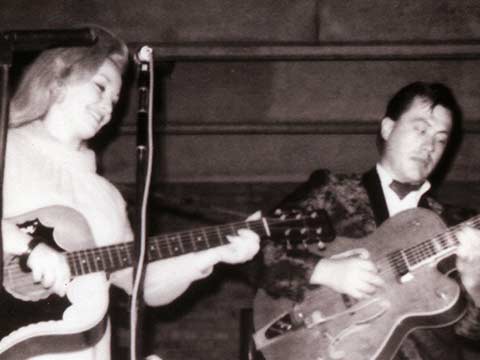
After graduating from Sevier County High School in 1964, Parton left for Nashville with songs, ambition, and a belief that she belonged there. Her official biography would later describe her life as a “rags-to-rhinestones” story, but the phrase only begins to capture the determination behind it.
Parton initially found success writing for other performers. Then, in 1967, “Dumb Blonde” became her first major recording breakthrough, and her debut album, Hello, I’m Dolly, introduced her as a rising country artist.
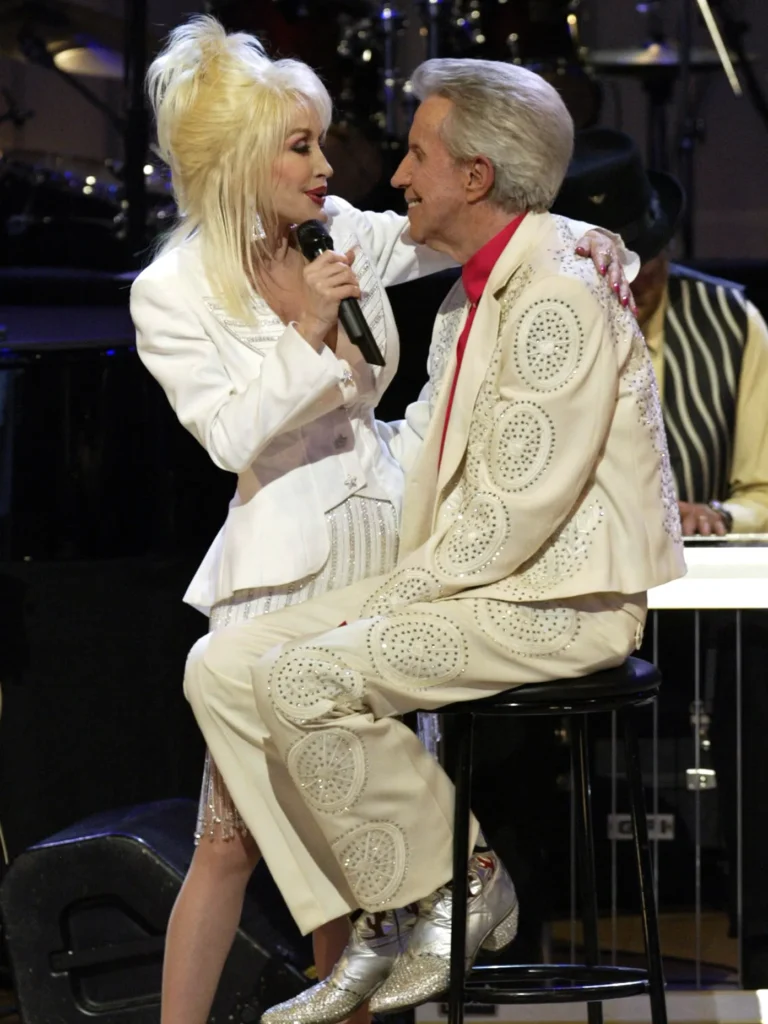
That same year, Porter Wagoner invited her to join his syndicated television program. Their partnership produced a long run of popular duets and gave Parton a national audience. However, she continued building a solo career and established herself as a songwriter capable of turning intimate experiences into universal stories.
Her first solo No. 1 country single, “Joshua,” arrived in 1971. “Coat of Many Colors” followed that year, and “Jolene” became an international country standard after its release in 1973.
The Songs That Changed Country Music
Parton possessed a distinctive soprano and instantly recognizable vibrato, but songwriting remained the foundation of her career. Reuters reported that she wrote an estimated 3,000 songs during her lifetime.
Her lyrics often sounded conversational, yet their simplicity concealed careful craftsmanship. She could establish a character, a conflict, and an emotional world in only a few lines.
“Jolene” found vulnerability inside jealousy. “Coat of Many Colors” transformed childhood humiliation into a statement about love and self-worth. “The Bargain Store” compared a wounded heart to secondhand merchandise, while “Light of a Clear Blue Morning” captured the relief of emerging from hardship.
Then there was “I Will Always Love You.”
Parton wrote the song as a farewell to Wagoner when she decided to leave his television program and pursue her solo career. The recording reached No. 1 on the country chart in 1974 and again after Parton rerecorded it for the 1982 film The Best Little Whorehouse in Texas.
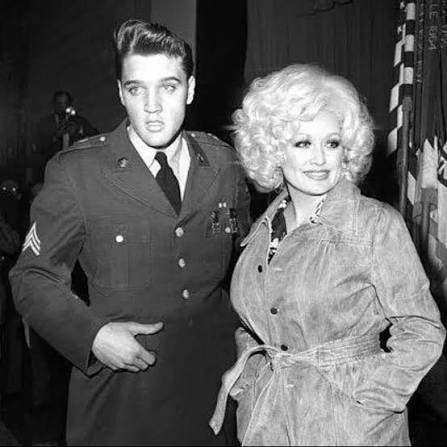
Elvis Presley wanted to record the song, but his manager sought a share of its publishing rights. Parton refused, protecting ownership of her composition at a time when women in the music business often had little control over their work.
Nearly two decades later, Whitney Houston recorded “I Will Always Love You” for The Bodyguard. Houston’s monumental performance introduced the song to another generation and made Parton’s composition one of the most recognizable ballads in modern popular music.
Meanwhile, Parton continued crossing musical boundaries without abandoning her country foundation. “Here You Come Again” established her as a pop crossover performer. “9 to 5” topped the pop and country charts, while “Islands in the Stream,” her duet with Kenny Rogers, became another defining hit.
She also joined Linda Ronstadt and Emmylou Harris for the acclaimed Trio albums and later returned to Appalachian acoustic music with the Grammy-winning bluegrass projects The Grass Is Blue and Little Sparrow.
In 2023, after initially questioning whether she belonged in the Rock & Roll Hall of Fame, Parton released Rockstar, an ambitious album featuring rock classics and collaborations with artists from across the musical spectrum.
Ultimately, she sold more than 100 million records worldwide and placed 25 songs at No. 1 on Billboard’s country charts.
A Star on Screen and a Businesswoman Behind the Scenes
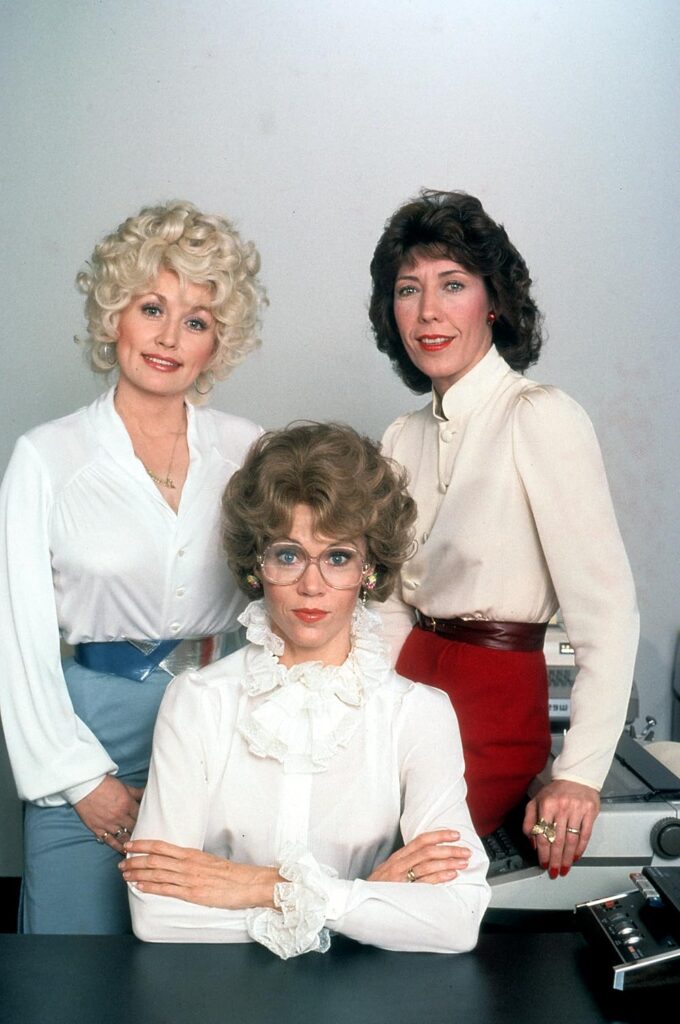
Parton expanded her audience again in 1980 with her film debut in 9 to 5, starring alongside Jane Fonda and Lily Tomlin.
Her performance proved that the humor and timing audiences loved in interviews translated naturally to film. Moreover, the title song became an enduring anthem about workplace inequality and earned her an Academy Award nomination.
She later starred in The Best Little Whorehouse in Texas, Rhinestone, Steel Magnolias, Straight Talk, and Joyful Noise. Parton received a second Academy Award nomination for “Travelin’ Thru,” which she wrote for the 2005 film Transamerica.
She also wrote the music and lyrics for the Broadway adaptation of 9 to 5, earning a Tony Award nomination. At the time of her death, work was continuing on DOLLY: A True Original Musical, a stage production based on her life and career.
Behind the glamour, Parton proved to be an unusually disciplined businesswoman. She retained ownership of valuable publishing rights, formed production companies, developed television and film projects, and built a family-entertainment business centered on the culture of her East Tennessee home.
In 1986, she became a partner in a Pigeon Forge theme park that was renamed Dollywood. The park grew into one of Tennessee’s leading attractions and a major economic engine for the Smoky Mountains.
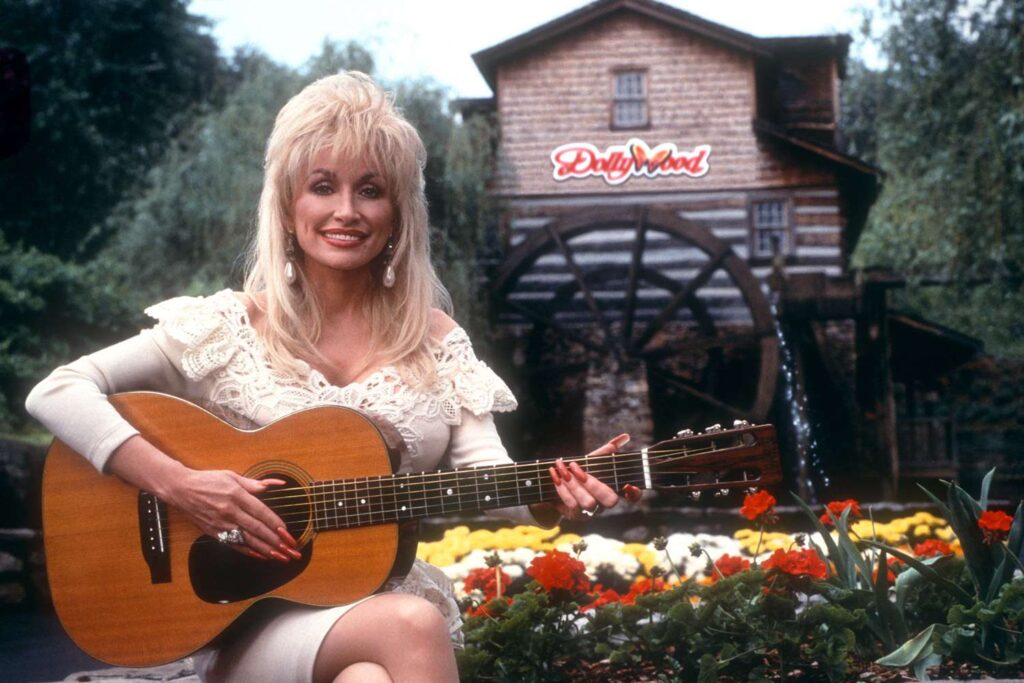
For Parton, Dollywood was more than a celebrity-branded attraction. It created jobs close to home, showcased Appalachian crafts and music, and allowed her success to benefit the region that shaped her.
A Love Story Lived Away From the Spotlight
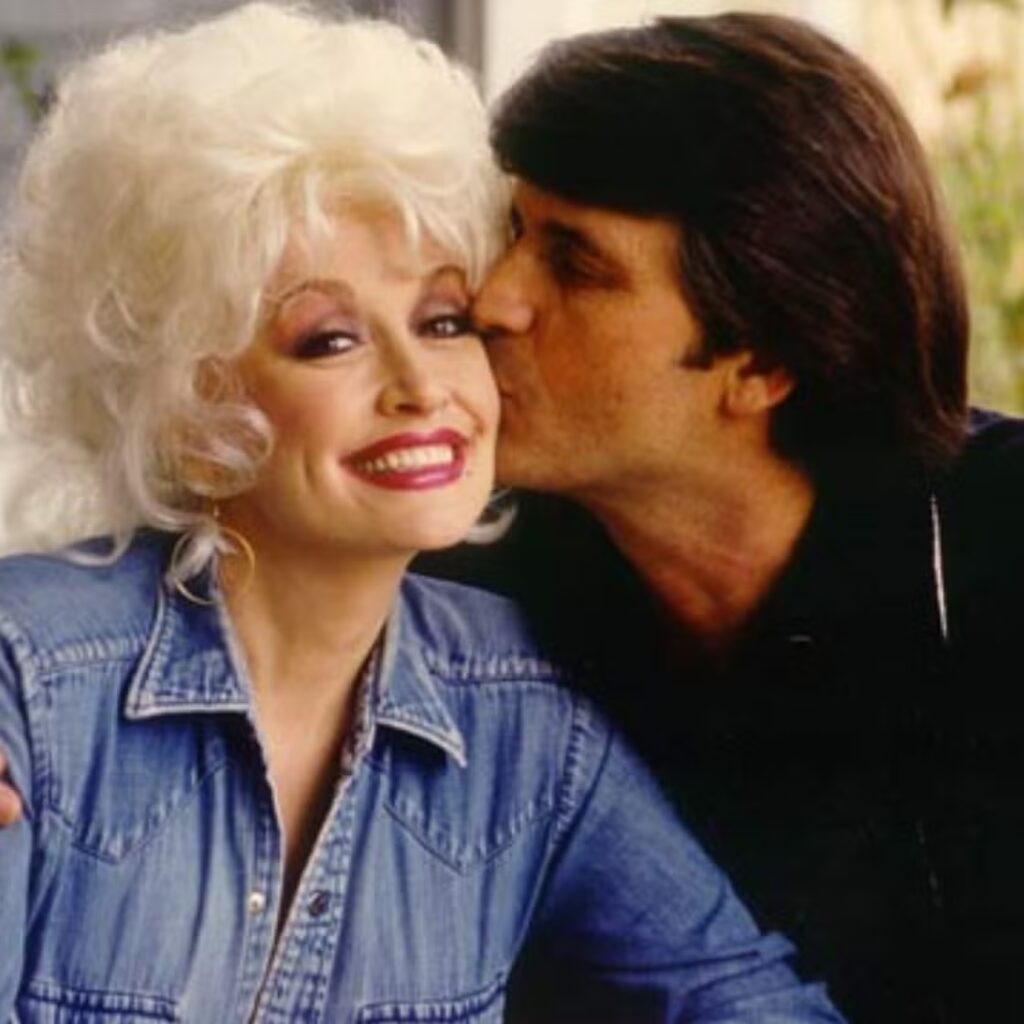
Despite her international fame, Parton protected the most important relationship in her private life.
She met Nashville businessman Carl Thomas Dean outside the Wishy Washy Laundromat on her first day in Nashville in 1964. Parton was 18, and Dean was 21.
They married May 30, 1966, in Ringgold, Georgia, during a small ceremony attended by Parton’s mother, the minister, and the minister’s wife.
Dean owned a paving business and avoided the entertainment spotlight almost completely. While Parton traveled the world, he preferred private life, road trips, ordinary meals, and time at home.
Their contrasting personalities became part of their love story. Parton often joked that the secret to their long marriage was spending time apart, but she also described Dean as the steady, humorous, and supportive presence behind her public life.
Dean died March 3, 2025, in Nashville at 82. The couple had been married for nearly 59 years and together for more than six decades.
In announcing his death, Parton said words could not adequately describe their love. Days later, she released “If You Hadn’t Been There,” a deeply personal song honoring the man she called the star of her life story.
On her official website’s remembrance of Dean, Parton wrote that great love stories do not end but continue through memory and song.
His death brought profound grief. Parton later acknowledged that she had neglected some of her own health concerns while caring for him and that the emotional strain had taken a physical toll. However, her family did not connect those earlier health matters to her death Tuesday, and no cause of death has been released.
The Book Lady
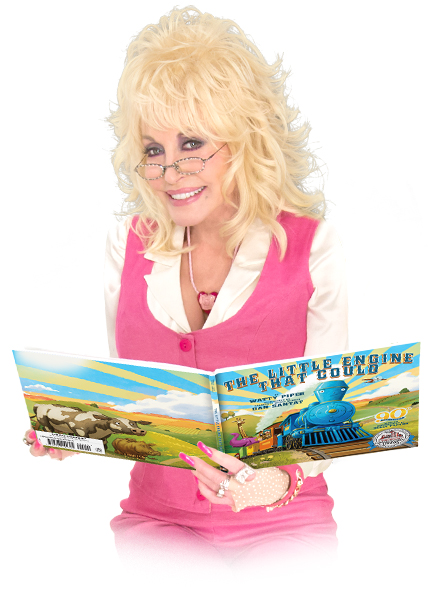
For all her gold records, awards, films, and business achievements, Parton’s most far-reaching legacy may be found in children’s mailboxes.
She founded the Dollywood Foundation in 1988 to improve educational opportunities for children in Sevier County. One early effort, the Buddy Program, offered students a financial reward for graduating. According to the foundation, the dropout rate among the participating classes fell from 35% to 6%.
Then, in 1995, she created Dolly Parton’s Imagination Library.
The program grew from Parton’s desire to honor her father, who could not read or write. It began by mailing one free, age-appropriate book each month to young children in Sevier County, regardless of family income.
From there, the idea spread across Tennessee, throughout the United States, and eventually into Canada, the United Kingdom, Australia, and the Republic of Ireland.
By the end of 2025, the Imagination Library had mailed more than 304 million books since its founding. The program now sends more than 3 million books each month to children from birth through age 5.
Its impact reached Alabama as well. In 2025, WEIS Radio reported on the Imagination Library’s expansion to automatically enroll eligible Alabama foster children.
Parton’s father took such pride in the program that she said his favorite recognition was hearing children call his famous daughter “the Book Lady.”
That title meant more to her than many of the awards attached to her music.
Putting Her Money Where Her Heart Was
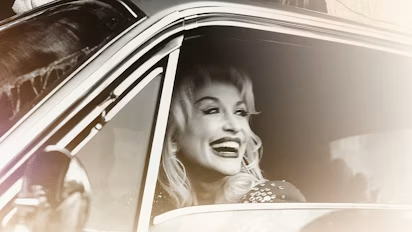
Parton’s generosity extended well beyond literacy.
Following the devastating 2016 wildfires in Sevier County, she established the My People Fund to help families whose primary homes had been destroyed or made uninhabitable. The fund initially provided $1,000 per month for six months to affected families and increased the final payment to $5,000.
The effort assisted hundreds of families when her home region needed her most.
During the COVID-19 pandemic, Parton gave $1 million to Vanderbilt University Medical Center. Vanderbilt said the donation supported critical early research connected to the Moderna vaccine and other efforts to understand, treat, and prevent the disease.
She later contributed another $1 million for pediatric infectious-disease research and supported pediatric cancer care.
In January 2026, Parton celebrated her 80th birthday by releasing a new version of “Light of a Clear Blue Morning” with Lainey Wilson, Miley Cyrus, Queen Latifah, and Reba McEntire. Net proceeds benefited pediatric cancer research at Monroe Carell Jr. Children’s Hospital at Vanderbilt.
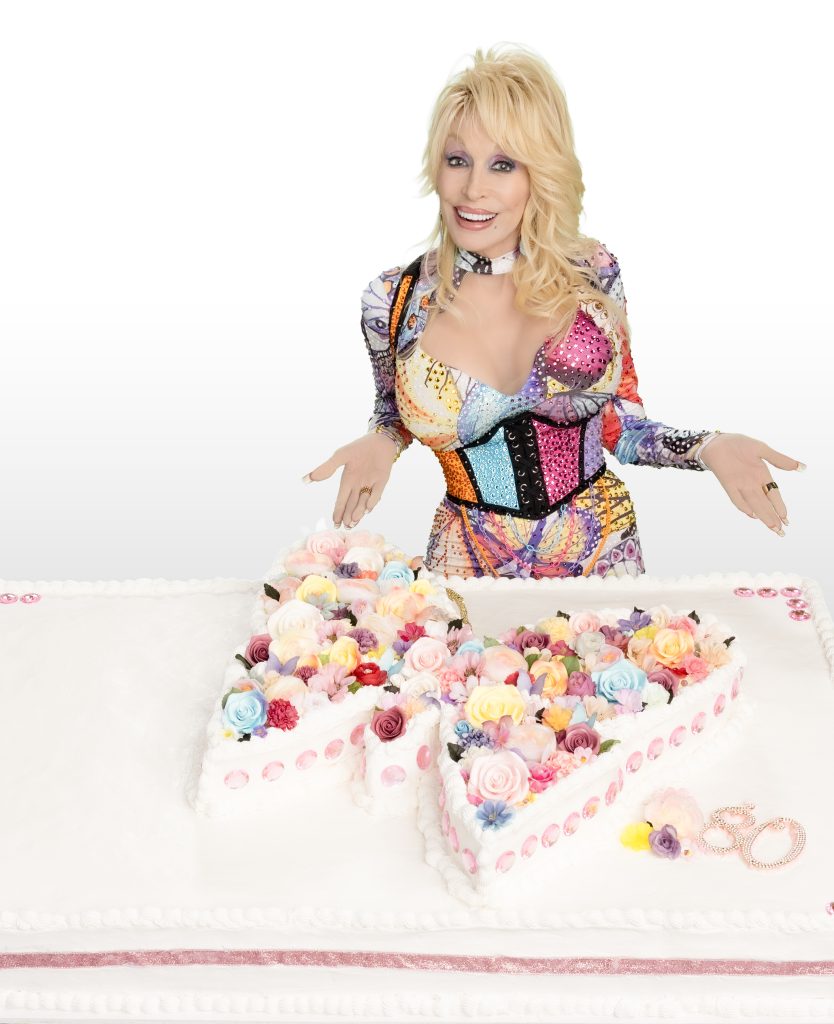
One month later, East Tennessee Children’s Hospital announced it would become Dolly Parton Children’s Hospital, reflecting a partnership focused on expanding pediatric care in the region.
Her philanthropy also included scholarships, wildlife conservation, health care, disaster recovery, and support for families and children.
In 2022, Parton received the $100 million Bezos Courage and Civility Award to direct toward charitable causes. As WEIS Radio reported at the time, Parton explained her philosophy simply: People who are in a position to help should help.
Honors for a Singular Career
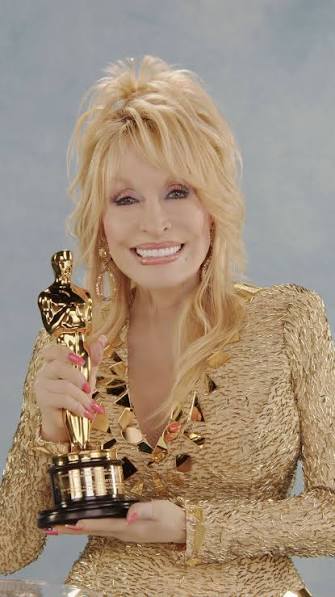
The list of honors grew nearly as long as her song catalog.
Parton joined the Grand Ole Opry in 1969 and entered the Country Music Hall of Fame in 1999. She entered the Songwriters Hall of Fame in 2001 and received the National Medal of Arts in 2005.
The Kennedy Center honored her in 2006, and the Recording Academy presented her with its Lifetime Achievement Award in 2011.
According to the Recording Academy, Parton earned 10 competitive Grammy Awards from 55 nominations. Her Grammy Lifetime Achievement Award stands separately among her honors.
She entered the Rock & Roll Hall of Fame in 2022 and received the Academy of Motion Picture Arts and Sciences’ Jean Hersholt Humanitarian Award in 2025.
Still, awards never fully explained her appeal.
Parton could appear beneath towering blond hair, covered in sequins and rhinestones, then disarm a room with a self-deprecating joke. She understood that the carefully constructed “Dolly” image attracted attention, but she also made sure the spectacle never controlled the woman inside it.
Underneath the glamour stood a serious songwriter, a shrewd business owner, a woman of deep faith, and a daughter of Appalachia who never stopped speaking about the people and places that raised her.
A Country Legend Whose Light Will Remain
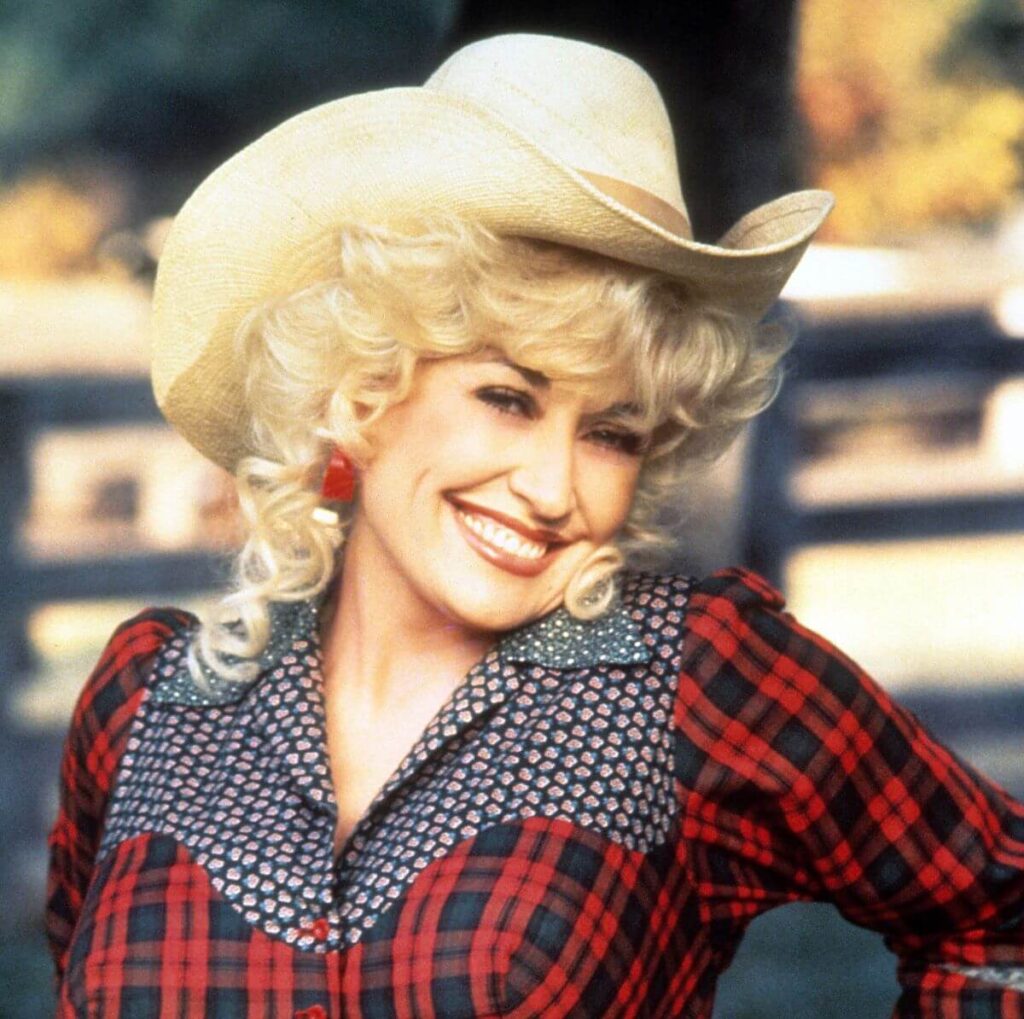
Dolly Parton became a legend because she achieved what few artists ever do: She became unmistakable without becoming inaccessible.
Listeners recognized her within the first few notes, yet her songs belonged to anyone who had experienced poverty, jealousy, ambition, grief, work, faith, family, or love.
She crossed from country into pop, bluegrass, gospel, rock, film, television, Broadway, publishing, and business. However, she never treated country music as a limitation or something to leave behind. She carried it with her.
For country radio, her legacy lives every time a songwriter turns an ordinary life into an unforgettable story. It lives whenever a singer chooses emotional truth over perfection. It lives in every artist who protects ownership of a song, every child who receives a book in the mail, and every mountain family helped through a difficult season.
Parton once said she hoped people would remember her as a good songwriter and that her songs would be her legacy.
They will be.
Yet her legacy is also written in millions of books, thriving communities, medical research, children’s hospitals, opportunities created for other performers, and acts of kindness often offered with more warmth than ceremony.
The rhinestones made her visible. The songs made her immortal. The generosity made her beloved.
From the mountains of East Tennessee to the radios of Northeast Alabama and Northwest Georgia, Dolly Parton’s voice became part of the soundtrack of American life.
Country music has lost one of its greatest legends.
The world has lost its Dolly.


You must be logged in to post a comment.