

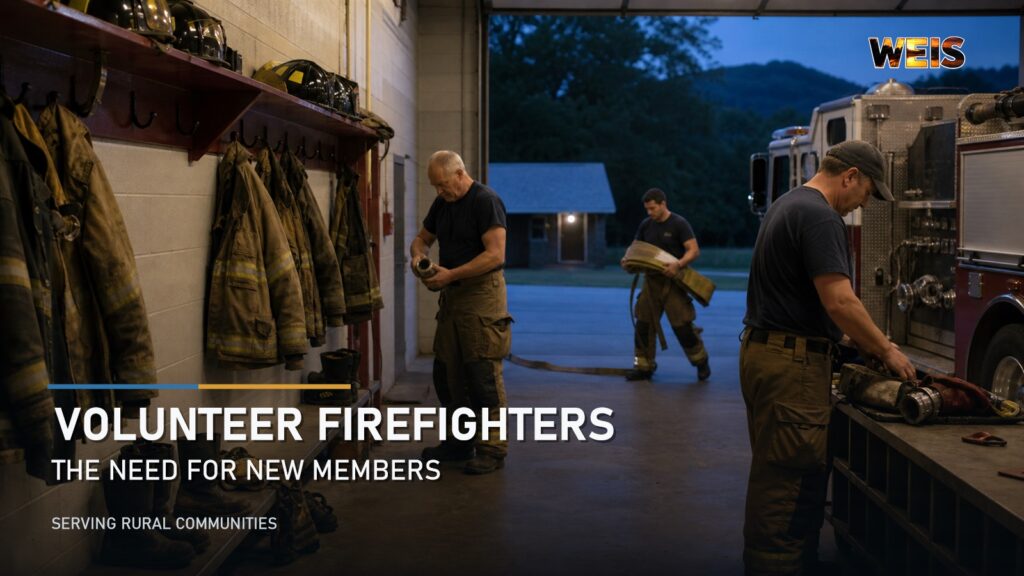
NORTHEAST ALABAMA – Volunteer firefighters answer calls at all hours, often leaving their families, jobs and daily responsibilities to help neighbors in crisis.
For many rural communities, these volunteers form the backbone of emergency response. However, national fire-service organizations say recruiting and retaining enough members remains a widespread challenge.
Alabama Relies Heavily on Volunteers
The U.S. Fire Administration reports that volunteers make up almost 70% of the nation’s firefighters.
Alabama depends even more heavily on volunteer service. The agency’s January 2024 registry counted 818 fire departments in the state. It classified 79.1% as volunteer and another 8.9% as mostly volunteer.
Those figures mean nearly nine out of every 10 registered Alabama departments rely primarily on volunteers.
The federal agency lists several challenges facing the volunteer fire service. They include declining membership, aging personnel, limited funding, rural operations and growing demands on volunteers’ time.
The Job Extends Beyond Fighting Fires
Modern fire departments respond to far more than structure fires. Calls may involve medical emergencies, vehicle crashes, hazardous materials, fallen trees and severe weather.
National registry data show about 71% of fire departments provide some level of emergency medical service. Nearly 79% provide vehicle extrication, while about 64% handle wildland or wildland-urban interface incidents.
Volunteers may also assist with search and rescue, traffic control and public safety programs. They train regularly and maintain equipment between calls.
That workload makes adequate staffing important. More trained members allow departments to divide responsibilities and improve the chance that enough personnel will be available when an emergency occurs.
Why Recruiting Members Can Be Difficult
The National Volunteer Fire Council released new recruitment and retention research in 2026. Its work examined why people volunteer, why some leave and what keeps others from joining.
Time remains one of the largest concerns. Volunteers must balance emergency calls and training with jobs, family obligations and other responsibilities.
Research also points to economic pressures, work-life balance and the way departments schedule training. A separate 2026 study found that training can affect recruitment and retention. However, the number of training hours alone does not explain the problem.
Flexible scheduling, strong leadership and a welcoming department culture can influence whether volunteers remain involved.
What Prospective Volunteers Should Expect
Requirements differ by community. The Alabama Fire College recommends contacting the volunteer department serving a person’s home or nearby area.
Departments may require applicants to meet age and residency rules. Other requirements may include a valid driver’s license, reliable transportation, a background check and a physical evaluation.
New members receive training before taking on emergency duties. Alabama’s certification process includes classroom instruction, practical skills and testing. Training covers areas such as fire behavior, building construction, protective equipment, hazardous materials and emergency operations.
Applicants should ask the department which certification path applies to them. They should also learn how often the department trains and what level of participation it expects.
Help Is Not Limited to Emergency Response
People who cannot serve as emergency responders may still have valuable skills to offer.
The National Volunteer Fire Council’s Make Me a Firefighter program says departments may use community volunteers for fundraising, public education, translation services, equipment support and community outreach.
Some volunteers assist with recordkeeping, technology, photography, grant applications or events. Others provide food, water and rehabilitation support during extended emergencies.
These roles allow trained responders to focus more of their time on calls and emergency preparation.
A Direct Investment in the Community
Volunteer firefighting requires time, training and a willingness to respond when neighbors need help. It can also provide teamwork, new skills and a direct way to serve the community.
Those interested should contact the volunteer fire department serving their area. They can ask whether the department is accepting members, what roles are available and how the application process works.
Even one additional trained member can strengthen a department’s ability to answer the next call.
RELATED ARTICLES:
Local Volunteer Fire Departments Join Forces for Live Training Burn in Leesburg



You must be logged in to post a comment.