

“100 Deadliest Days of Summer” Spotlighted as Study Highlights Distracted Driving Risks Nationwide
The stretch between Memorial Day and Labor Day, often referred to as the “100 Deadliest Days of Summer,” continues to draw concern from safety officials and researchers due to a rise in fatal crashes involving teen drivers. While summer travel increases across the country, experts say the season also brings heightened risk on the roads—particularly from distracted driving.
https://www.whistleout.com/CellPhones/Guides/distracted-driving-by-state#state-rankings
A recent analysis conducted using data from the National Highway Traffic Safety Administration (NHTSA) examined fatal and injury crashes involving distracted driving across all 50 states. The findings underscore the ongoing danger posed by inattention behind the wheel, especially phone-related distractions.
According to federal data cited in the report, approximately 6,165 people are injured or killed annually as a result of distracted driving. Researchers noted that May stands out as the deadliest month for crashes involving driver distraction.
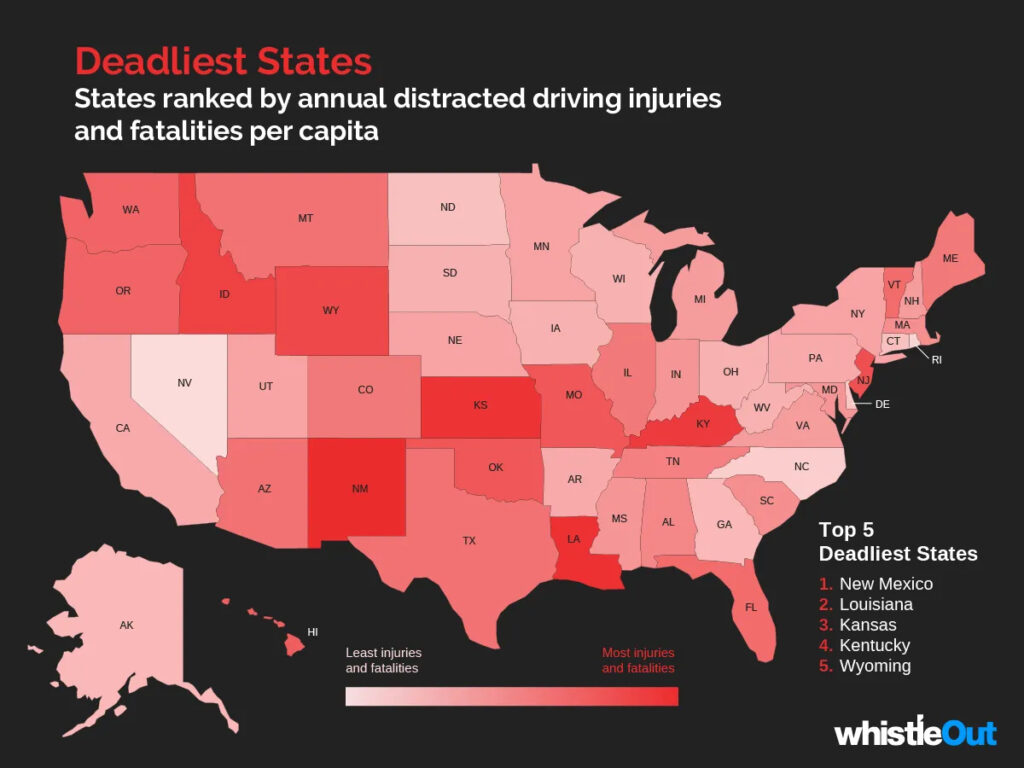
The study also ranked states based on per-capita impact of distracted driving fatalities and injuries. Georgia was ranked No. 44 on the list, with 79 deaths and injuries attributed to distracted driving in a single year. New Mexico ranked highest overall, with 286 victims in a single year, making it the most affected state per capita in the analysis.
Demographic breakdowns in the data show distracted driving is not limited to one age group. Approximately 15% of fatal distracted driving crashes involve drivers age 20 or younger, while 23% involve drivers age 65 or older, indicating that both young and older motorists are significantly represented in crash statistics.
Researchers identified cell phone use as the leading contributor to distracted driving incidents. Activities such as texting, checking notifications, programming GPS systems, selecting music, or even charging a device while driving all contribute to driver inattention. Survey data included in the analysis found that 17% of U.S. adults admitted to using a phone while driving, a figure that increased to roughly one in five among Gen Z and millennial respondents.
While acknowledging that smartphones remain a central cause of distraction, safety experts emphasize that distracted driving also includes eating, adjusting vehicle controls, interacting with passengers, or any activity that diverts attention from the road.
The report notes that modern vehicle technology and smartphone safety features can help reduce risk. Systems such as Apple CarPlay and Android Auto allow for limited hands-free use, while built-in driving modes on smartphones can silence notifications and limit distractions. Despite these tools, experts stress that driver behavior remains the most critical factor in preventing crashes.
Safety recommendations outlined in the study include:
- Avoid texting or manually using a phone while driving
- Use hands-free systems when necessary
- Pull over before eating or handling tasks inside the vehicle
- Avoid driving while drowsy
- Utilize smartphone driving modes that limit notifications and interactions
The Governors Highway Safety Association reports that nearly every state has some form of cell phone restriction for drivers. Thirty-three states and several U.S. territories ban all handheld phone use while driving, while 49 states prohibit texting for all drivers. Only Montana does not have a statewide texting ban.
Although no state bans all cell phone use for all drivers, most jurisdictions enforce primary laws allowing officers to issue citations solely for phone use behind the wheel.
Federal communications data cited in the report indicates that cell phone use was a factor in approximately 14% of fatal distracted driving crashes in 2024, reinforcing concerns that technology remains a leading contributor to roadway deaths.
As summer travel increases, safety officials continue to urge drivers to remain focused on the road, particularly during the high-risk months between Memorial Day and Labor Day when traffic volume and crash rates historically rise.


You must be logged in to post a comment.