

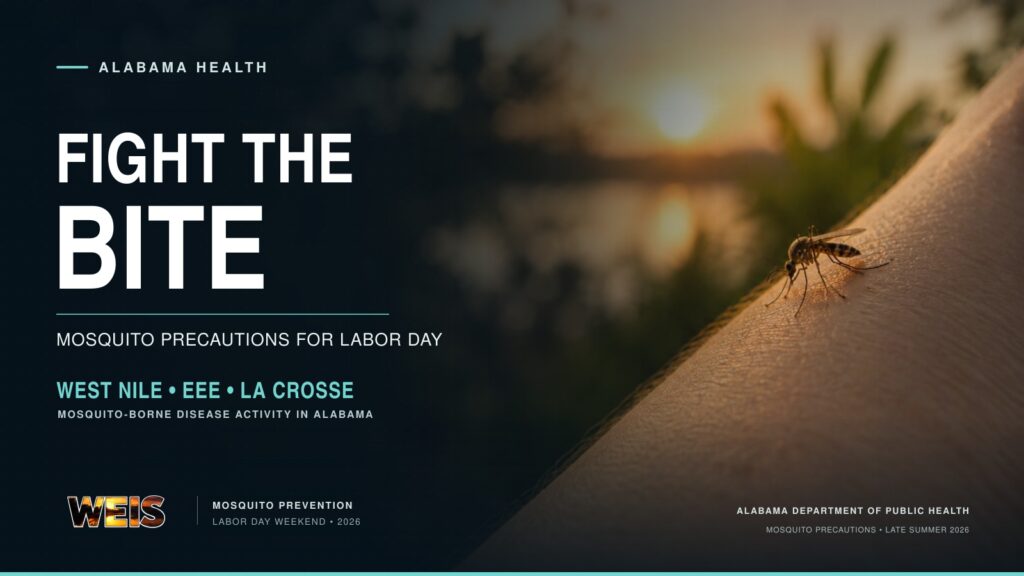
ALABAMA – The Alabama Department of Public Health is urging residents to guard against mosquito bites during Labor Day weekend.
Health officials say mosquito activity and the risk of disease remain concerns through late summer and early fall. Recent state surveillance has confirmed West Nile virus activity in both people and animals.
Alabama has also recorded one human case of La Crosse virus and one eastern equine encephalitis case in a horse. On Aug. 27, the Mobile County Health Department reported a West Nile-positive sentinel chicken.
West Nile Virus Symptoms
Most people who contract West Nile virus do not develop symptoms. When illness occurs, symptoms may include fever, headache, body aches, nausea, vomiting, or a rash.
However, severe cases can cause neurological symptoms. Anyone who develops concerning symptoms after mosquito exposure should contact a health care provider.
West Nile virus primarily spreads through Culex mosquitoes in a cycle involving mosquitoes and birds. People and horses generally do not develop enough virus in their blood to infect mosquitoes.
Eastern equine encephalitis circulates mainly between birds and certain mosquito species. Other mosquitoes may then transmit the virus to people and horses.
The eastern treehole mosquito primarily spreads La Crosse virus. This mosquito breeds in tree holes and containers that hold water.
How to Prevent Mosquito Bites
ADPH encourages residents to “Fight the Bite” by taking several precautions:
- Apply an EPA-registered insect repellent and follow all label directions.
- Wear long sleeves and long pants when practical.
- Use screens on windows and doors, and use air conditioning when available.
- Remove standing water from tires, buckets, flowerpots, toys, gutters, birdbaths, pet bowls, and other containers.
- Limit outdoor exposure around dawn and dusk when possible.
Approved repellent ingredients include DEET, picaridin, IR3535, oil of lemon eucalyptus, para-menthane-diol, and 2-undecanone.
Horse Owners Encouraged to Take Precautions
Horse owners should work with their veterinarians to keep EEE and West Nile vaccinations current.
Owners can further reduce mosquito exposure by removing standing water and using approved equine repellents. Screens and fans may also help reduce mosquitoes in barns.
When practical, horses should remain indoors during periods of peak mosquito activity. Owners should contact a veterinarian if a horse develops fever, weakness, loss of coordination, staggering, tremors, seizures, or other neurological signs.
Additional prevention guidance is available through the state’s mosquito-borne disease information page.
RELATED ARTICLES:
ADPH Urges Alabamians to Recognize Warning Signs of Heat-Related Illness

You must be logged in to post a comment.