

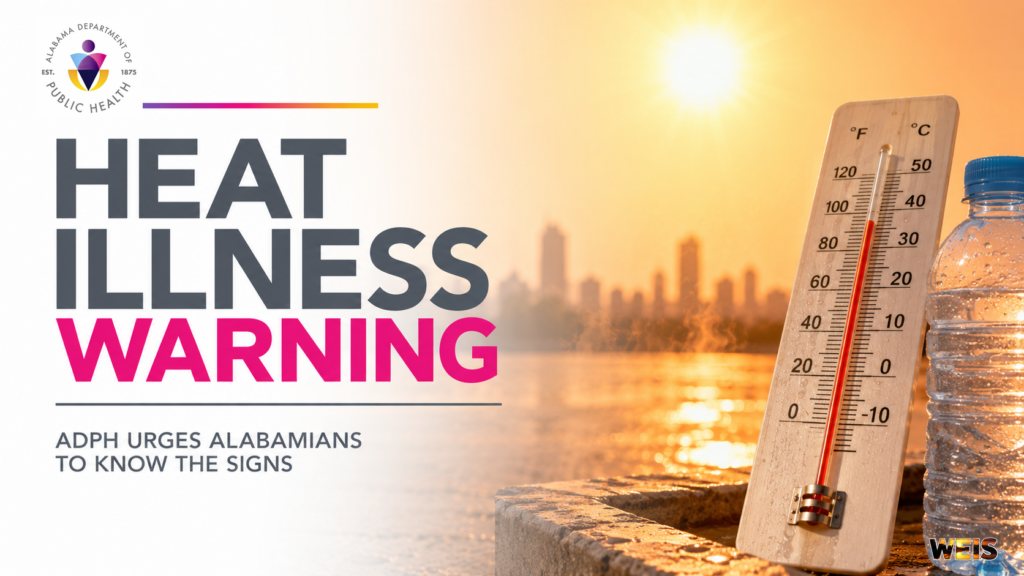
MONTGOMERY– The Alabama Department of Public Health is urging residents to recognize the warning signs of heat-related illness as extreme heat and high humidity continue across the state.
The warning comes as dangerous heat affects Northeast Alabama. ADPH says anyone exposed to high temperatures can develop symptoms when the body’s temperature-control system becomes overloaded.
The most common heat-related illnesses include heat cramps, heat exhaustion, and heat stroke.
Know the Warning Signs
Heat cramps can cause muscle pain or spasms in the abdomen, arms, or legs. People may also experience heavy sweating and high levels of salt in their sweat.
Meanwhile, heat exhaustion can produce several warning signs. Symptoms include heavy sweating, pale skin, muscle cramps, tiredness, weakness, dizziness, headache, nausea, vomiting, or fainting.
Other symptoms may include cool and moist skin, a fast but weak pulse, rapid breathing, or irritability.
Older adults face an increased risk of heat exhaustion. People with high blood pressure and those who work or exercise in hot conditions also face greater risks.
If someone does not receive treatment, heat exhaustion can progress to heat stroke.
Heat Stroke Is a Medical Emergency
Heat stroke, sometimes called sun stroke, is the most serious heat-related illness.
The condition occurs when the body can no longer control its temperature. According to ADPH, body temperature can rise to 106 degrees or higher within 10 to 15 minutes.
Warning signs include an extremely high body temperature, red and hot skin, a rapid and strong pulse, headache, dizziness, nausea, and dehydration.
In addition, a person experiencing heat stroke may become confused or combative. They may also lose consciousness.
Heat stroke requires immediate medical attention. Even with treatment, the condition can become life-threatening or cause serious long-term health problems.
Steps Can Reduce the Risk
ADPH recommends drinking plenty of fluids during periods of extreme heat. However, people should avoid alcohol and caffeinated drinks because they can contribute to dehydration.
Residents should also spend time in air-conditioned spaces and stay out of direct sunlight when possible.
In addition, ADPH recommends wearing light-colored, loose-fitting clothing and a wide-brimmed hat. People spending time outdoors should use sunscreen with an SPF of 15 or higher.
Cool showers or baths can also help lower body temperature.
People should reduce or avoid strenuous activities during the hottest part of the day. When possible, outdoor work or exercise should take place during cooler periods.
Most importantly, ADPH warns people never to leave a person or pet inside a parked vehicle.
Some People Face Greater Risk
Certain health conditions can increase the risk of heat-related illness.
ADPH says people with heart disease, diabetes, obesity, poor circulation, or a history of stroke face greater risks during hot weather.
Older adults and young children are also more vulnerable. In addition, some medications can make people more susceptible to heat-related illness.
Residents should watch themselves and others closely during periods of extreme heat. Recognizing symptoms early and taking action can prevent a minor heat illness from becoming a medical emergency.
Additional heat safety information is available through the Alabama Department of Public Health.


You must be logged in to post a comment.