

(NEW YORK) — This year was full of first-of-its-kind stories that got Americans talking. Here’s a look back at some of the most talked about U.S. stories of 2025 outside of politics, from the Los Angeles wildfires to Sean “Diddy” Combs’ trial.
LA wildfires
The Palisades and Eaton fires erupted in Los Angeles County on Jan. 7. With severe drought conditions and strong Santa Ana winds fueling the flames, the fires spread quickly, killing at least 29 people and wiping out thousands of homes in the densely populated neighborhoods of Pacific Palisades and Altadena.
In October, Jonathan Rinderknecht was arrested for allegedly igniting a brush fire in the Pacific Palisades on Jan. 1 — a fire that prosecutors say eventually became the Palisades Fire. Rinderknecht, a former Pacific Palisades resident, has pleaded not guilty to arson affecting property, timber set afire and destruction of property.
3 back-to-back plane crashes
On Jan. 29, an American Airlines regional jet was on approach to Washington, D.C.’s Ronald Reagan Washington National Airport when it collided with a U.S. Army Black Hawk helicopter, sending both aircraft plunging into the Potomac River.
All 64 people on board the plane and all three soldiers on the helicopter were killed.
The collision marked the nation’s first major commercial airline crash since 2009.
The National Transportation Safety Board has not released its final report, which will determine the probable cause of the crash, but investigators said during a July hearing that the Black Hawk pilots likely didn’t know how high they were flying or how close they were to the plane due to faulty altimeters inside the aircraft. NTSB Chair Jennifer Homendy told reporters, “It’s possible there was zero pilot error here.”
After the crash, Sen. Ted Cruz introduced legislation called the ROTOR Act. The law would require nearly all aircraft to transmit Automatic Dependent Surveillance – Broadcast (ADS-B), a system which allows aircraft to transmit their location to other aircraft as well as air traffic controllers. It would also close a loophole that allows military aircraft to operate without ADSB-Out. The ROTOR Act is awaiting a vote in the Senate.
The NTSB is expected to reveal the probable cause and its recommendations in late January.
Just two days after the D.C. crash, a medical transport jet crashed in Philadelphia. The jet, which was carrying a child and her mother along with four other people, was in the air for less than a minute after taking off from Northeast Philadelphia Airport. All six people on board, as well as one person on the ground, were killed. The NTSB has not released a cause.
Then on Feb. 17, a Delta plane crashed and overturned during landing at Toronto Pearson International Airport. All 80 people on board survived. Twenty-one passengers were injured, including two seriously injured.
A report released in March found that the right main landing gear broke and collapsed on impact as the plane landed at a high descent rate. Once the right main landing gear collapsed, the wing hit the runway, sprayed fuel and caused a fire. The Transportation Board of Canada has not yet released a probable cause for this crash.
Gene Hackman and his wife die in their home
When actor Gene Hackman and his wife Betsy Arakawa were found dead at their Santa Fe, New Mexico, home during a Feb. 26 welfare check, their causes of death were not immediately clear, which sparked national intrigue.
In March, investigators announced that Arakawa, 65, died from hantavirus pulmonary syndrome, a rare disease transmitted through rodent urine, droppings or saliva, officials said.
Hackman, 95, who died of cardiovascular and Alzheimer’s disease, was likely home with his deceased wife for one week before he died, officials said. Arakawa died around Feb. 12, while Hackman died around Feb. 18, officials said.
Hackman “was in an advanced state of Alzheimer’s, and it’s quite possible that he was not aware that she was deceased,” an investigator said.
One of the couple’s three dogs was also found dead in a crate during the welfare check. The dog likely died of dehydration and starvation, a report found.
Karen Read’s trial
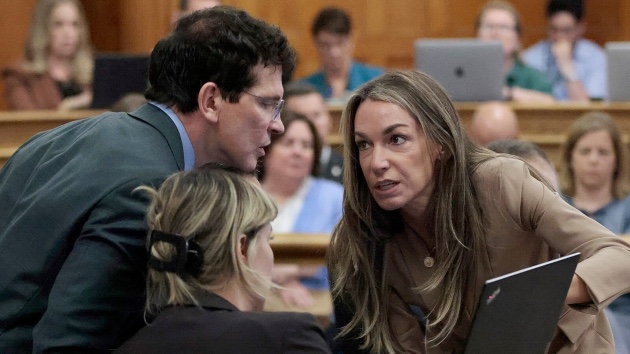
On June 18, a Massachusetts jury found Karen Read not guilty of murdering her Boston police officer boyfriend, ending a criminal case that gripped the nation’s attention.
While Read was acquitted of the most serious charges — including second-degree murder, manslaughter and leaving the scene after an accident resulting in death — the jury did find her guilty of operating under the influence of liquor. The judge immediately sentenced her to one-year probation, the standard for a first-time offense.
The first criminal case against Read ended in a mistrial last year.
Prosecutors alleged Read hit her boyfriend, John O’Keefe, with her car outside the home of a fellow police officer after a night of heavy drinking in 2022 and then left him to die there during a blizzard. The defense had argued that Read’s vehicle did not hit O’Keefe and instead said O’Keefe was attacked by a dog and beaten by other people who were in the house before he was thrown outside in the snow to die.
Texas flooding
In the early hours of July 4, heavy rain inundated Texas’ Hill Country region, quickly sparking catastrophic flooding.
Over 130 people were killed, including at least 117 in Kerr County, officials said. More than two dozen of the victims were from Camp Mystic, a Christian all-girls sleepaway camp in Kerr County.
Some state leaders and environmental experts told ABC News in July that a number of the cabins were in known flood zones and close proximity to the river, according to officials and FEMA’s road maps.
In September, Texas Gov. Greg Abbott signed into law three bills aimed at improving the safety of camps in Texas and protecting Texans from future flooding events, after parents of Camp Mystic flooding victims advocated before the state legislature for better safety measures.
In October, legislative committees were formed by Lt. Gov. Dan Patrick and Speaker of the Texas House of Representatives Dustin Burrows to investigate the flooding. No investigative findings have been announced as of December.
In November, a slew of wrongful death cases were filed against Camp Mystic on behalf of many of the parents who lost their children. The families previously criticized Camp Mystic’s decision to reopen one of its campsites next year.
In a December letter to parents, Camp Mystic officials said they plan to implement safety measures that are not only in compliance of the new camp safety laws, but “exceed their requirements.” The camp’s partial reopening is slated for summer 2026.
Bryan Kohberger pleads guilty
Weeks before Bryan Kohberger was set to go on trial for the 2022 quadruple homicides at the University of Idaho, Kohberger admitted to the crimes at a change of plea hearing in July.
At sentencing, Kohberger was given four consecutive life sentences on the four first-degree murder counts and the maximum penalty of 10 years on the burglary count.
Survivors of the attack and relatives of the four slain students spoke out, sharing emotional statements at Kohberger’s sentencing hearing. Surviving roommate Dylan Mortensen said Kohberger “took away my ability to trust the world around me” and “shattered me in places I didn’t know could break.” Kristi Goncalves, mom of victim Kaylee Goncalves, told Kohberger that “hell will be waiting” for him.
The judge acknowledged Kohberger’s motive may never be known.
Sean Combs’ trial
Following an eight-week trial in Manhattan federal court that gripped the country, in July, music mogul Sean “Diddy” Combs was convicted of two counts of transportation for the purposes of prostitution. The jury acquitted Combs of more serious sex trafficking and racketeering charges.
At October’s sentencing hearing, Combs tearfully apologized in court, saying, “I’ve been humbled and broken to my core.”
The mogul is now serving a four-year sentence at FCI Fort Dix, a federal prison in New Jersey. Combs is appealing the conviction and his sentence.
Manhunt for Travis Decker
A monthslong manhunt for Travis Decker unfolded in Washington state this summer, capturing national attention.
It began on May 30 when Decker picked up his three daughters at his ex-wife’s home for a planned visitation.
On May 31, police announced the disappearance of the three daughters: Paityn, 9; Evelyn, 8; and Olivia, 5.
On June 2, the girls’ bodies were found near a campground. Decker allegedly suffocated his daughters to death, police said.
Decker, a former member of the military with “extensive training,” disappeared, sparking a multi-agency manhunt.
An attorney for Decker’s ex-wife told ABC News that Decker lacked mental health resources and struggled with post-traumatic stress disorder.
On Sept. 18, Decker’s remains were found in a remote, wooded area. The local coroner said an autopsy couldn’t be done due to how little remains were left.
Menendez brothers resentenced, but denied parole and denied new trial
In their continued push for freedom this year, Lyle and Erik Menendez had one big legal win, but two significant losses.
The brothers were convicted in 1996 of the first-degree murder of their parents and sentenced to two consecutive life prison terms without the possibility of parole. The last several years, they’ve pushed to be released, citing accomplishments in prison and the abuse they alleged they suffered from their parents.
This May, Judge Michael Jesic resentenced Erik and Lyle Menendez to 50 years to life in prison, making them immediately eligible for parole under youth offender parole laws. Jesic said he was moved by letters from prison guards and is amazed by what the brothers have accomplished in their decades behind bars.
But in August, the brothers were both denied parole. Commissioners reviewed Erik Menendez’s time in prison and noted some inappropriate behavior with visitors, drug smuggling, misuse of state computers, violent incidents and illegal cellphone use. Lyle Menendez’s panel of commissioners — who were different from those reviewing Erik’s case — noted he also was caught illegally using cellphones. The brothers will next be eligible for parole in three years.
Their second loss came in September, when Judge William Ryan denied the brothers’ habeas corpus petition, which they filed in 2023 to try to toss their conviction and get a new trial based on newly discovered evidence. The judge said “neither piece of evidence adds to the allegations of abuse that the jury already considered.”
Charlie Kirk killed
On Sept. 10, conservative activist Charlie Kirk was shot and killed in the middle of his outdoor event at Utah Valley University in Orem, Utah.
Kirk, 31, was the founder of the conservative youth activist organization Turning Point USA, and the Utah Valley event marked the first stop of his “The American Comeback Tour,” which invited students on college campuses to debate hot-button issues.
The suspected shooter, 22-year-old Tyler Robinson, fled the scene, prompting a massive manhunt. Robinson surrendered to authorities on the night of Sept. 11.
Charlie Kirk’s wife, Erika Kirk, said at her husband’s memorial that she forgives Robinson. “That young man, I forgive him. … The answer to hate is not hate,” she said.
Robinson has been charged with aggravated murder, felony discharge of a firearm causing serious bodily injury, obstruction of justice, two counts of witness tampering and commission of a violent offense in the presence of a child. He has not entered a plea.
Rob Reiner and Michele Singer Reiner killed
On Dec. 14, renowned Hollywood director Rob Reiner and his wife Michele Singer Reiner were found stabbed to death in their Los Angeles home.
Hours later, the suspect — the couple’s 32-year-old son, Nick Reiner — was taken into custody.
Nick Reiner — who was living on his parents’ property, according to a former family security guard — was charged with two counts of first-degree murder, with the special circumstance of multiple murders, prosecutors said. He has not entered a plea. The charges carry a maximum sentence of life in prison without the possibility of parole or the death penalty, prosecutors said.
The Reiners’ other children, Jake and Romy Reiner, said in a statement, “Words cannot even begin to describe the unimaginable pain we are experiencing.”
“The horrific and devastating loss of our parents, Rob and Michele Reiner, is something that no one should ever experience. They weren’t just our parents; they were our best friends,” they said.
“We are grateful for the outpouring of condolences, kindness, and support we have received not only from family and friends but people from all walks of life,” Jake and Romy Reiner said. “We now ask for respect and privacy, for speculation to be tempered with compassion and humanity, and for our parents to be remembered for the incredible lives they lived and the love they gave.”
ABC News’ Olivia Osteen, Meredith Deliso, Clara Mcmichael, Ayesha Ali and Sam Sweeney contributed to this report.
Copyright © 2025, ABC Audio. All rights reserved.