

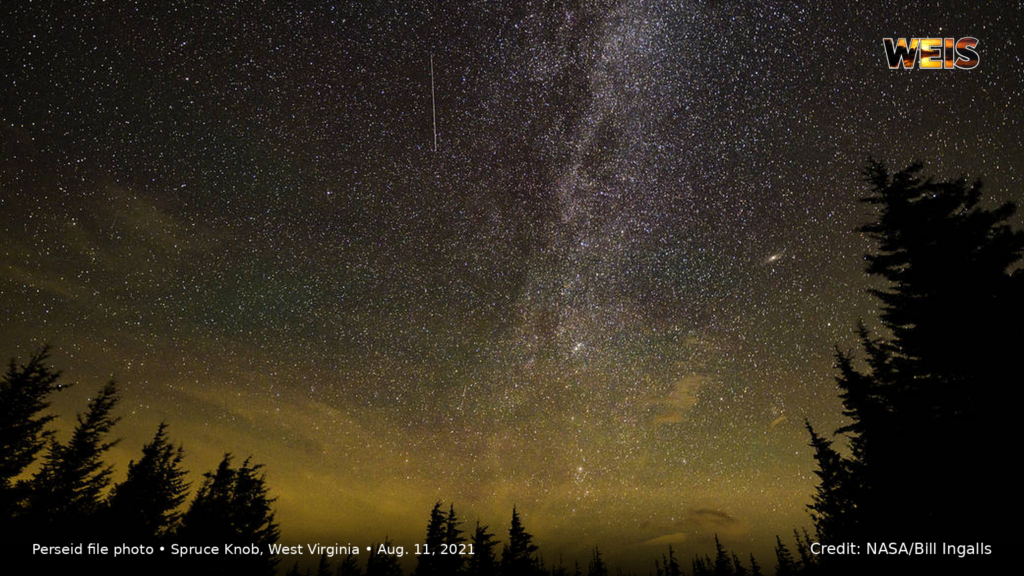
CENTRE– The Taurid meteor shower could give northeast Alabama and northwest Georgia residents a reason to look up tonight. The Northern Taurids reach their peak around Nov. 11–12, bringing a chance to spot bright meteors across the night sky.
According to NASA’s November skywatching guide, the Northern Taurids produce around five meteors per hour under ideal conditions. An occasional bright fireball can make the wait worthwhile. However, clouds and nearby lights can reduce how many meteors an observer sees.
When to Look Up
The hours around midnight offer a favorable opportunity because Taurus, the constellation the meteors appear to come from, is highest around then. For local viewers, roughly 10 p.m. to 2 a.m. offers a practical window, weather permitting. Alabama residents should use Central time, while northwest Georgia residents should use Eastern time.
Moonlight should pose little interference. The American Meteor Society lists favorable lunar conditions for the Northern Taurids’ peak.
Local Weather Could Affect the View
The National Weather Service forecast for the Centre area includes partly cloudy skies and a 30% chance of showers between 9 p.m. and 3 a.m. Temperatures should fall toward 50 degrees overnight. Meanwhile, Rome’s forecast calls for partly cloudy skies and a low near 49.
Those conditions could limit visibility, so observers should watch for breaks in the clouds. Thursday night may offer another opportunity because the Taurids remain active beyond their peak. NWS forecasts currently call for mostly clear skies Thursday night around Centre and Rome.
How to Improve Your Chances
Find a dark location with a broad view of the sky, away from streetlights and other bright lighting. A rural yard or field can work well with the owner’s permission.
Then give your eyes about 30 minutes to adjust to the darkness. Also, keep phone screens dim and avoid repeatedly checking them.
A reclining chair or blanket can make watching more comfortable. Also, dress warmly and allow time for the occasional meteor to appear.
Use your eyes to watch a wide area instead of looking through binoculars or a telescope. Meteors can appear across the sky, so identifying Taurus is helpful but unnecessary.
Learn More About the Taurids
The EarthSky Taurid guide explains the shower’s timing and viewing conditions. NASA and the American Meteor Society also provide information about other November meteor showers.
For updated local conditions, check the Centre-area NWS forecast before heading outside.


You must be logged in to post a comment.