


CENTRE– The Orionid meteor shower reaches its peak this week, offering Northeast Alabama and Northwest Georgia a chance to see fragments of Halley’s Comet streak overhead.
The best opportunity comes late Wednesday night, October 21, into the predawn hours Thursday, October 22. However, a bright Moon will complicate the view until it sets.
NASA’s October skywatching guide recommends looking before dawn after moonset. For local skywatchers, that makes an early alarm more useful than heading outside just after dinner.
When and How to Watch
The American Meteor Society’s 2026 calendar lists the peak night as October 21–22. It also places the shower’s full activity period between October 2 and November 7.
In other words, the Orionids continue beyond one night. Observers can try nearby mornings if clouds interfere with the peak.
Meanwhile, the Moon will be about 74% illuminated on peak night, according to the society. Its glare can conceal fainter meteors while it remains above the horizon.
NASA therefore points viewers toward the darker window after moonset and before dawn. Check moonset for your specific location, since it varies geographically.
For the simplest viewing plan, choose a safe place away from streetlights and bright buildings. Also, look for a broad view with few trees or structures blocking the sky.
A reclining lawn chair or blanket can make a long watch more comfortable. Bring layers, and check the National Weather Service forecast before going out.
How Many Meteors Might Appear?
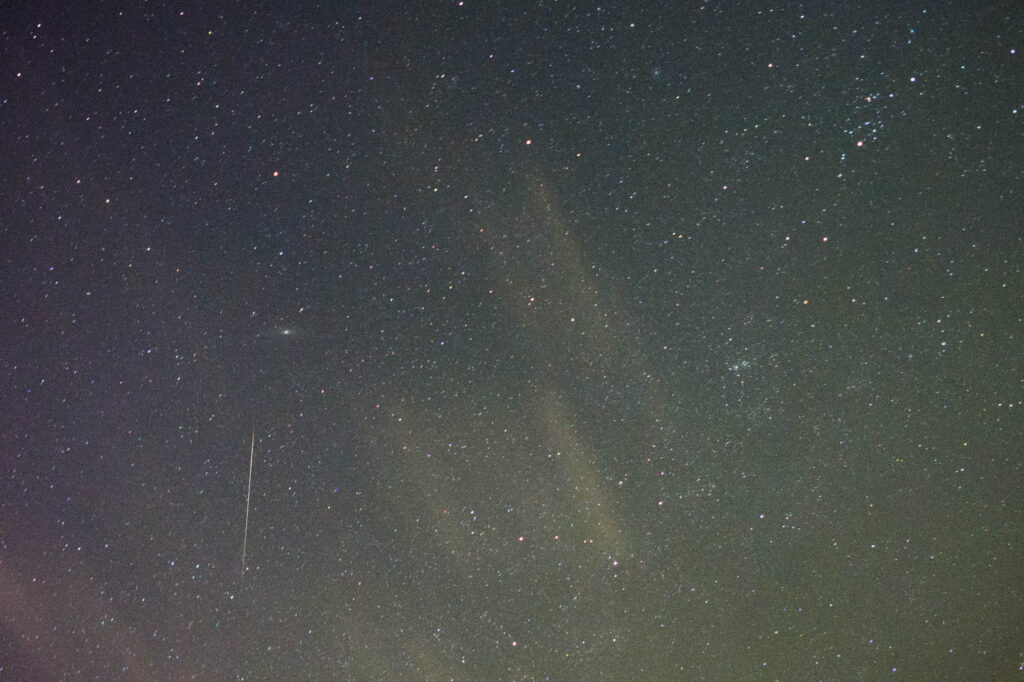
NASA lists about 10 to 20 Orionid meteors per hour under dark skies. However, that figure describes favorable conditions, rather than a guaranteed count from any backyard.
Moonlight, clouds, artificial lighting, and the shower’s position in the sky can reduce what observers actually see. Likewise, activity can include quiet stretches followed by several meteors.
The American Meteor Society describes the Orionids as a medium-strength shower. Although exceptional years have produced much higher rates, its calendar says recent displays have shown low to average activity.
As a result, patience and a dark location matter more than expecting a constant stream of shooting stars.
Why Halley’s Comet Produces the Orionids
The light show begins when Earth encounters debris along the orbit of Halley’s Comet. As particles enter the atmosphere, they disintegrate and produce visible streaks.
According to NASA’s Orionids guide, these meteors enter the atmosphere at roughly 41 miles per second. That speed helps explain their brief, bright appearances.
Some also leave glowing trails that linger for seconds or minutes. Occasionally, a particularly bright meteor produces a fireball.
Meanwhile, Halley itself follows a much longer timetable. NASA’s comet profile says it last appeared in Earth’s skies in 1986 and will return in 2061.
Each visit to the inner solar system sheds more ice and rocky material. That debris also supplies the Eta Aquariid meteor shower in May.
The Orionids therefore offer an annual connection to the famous comet while observers wait decades for its return.
Where to Look—and What to Leave Inside
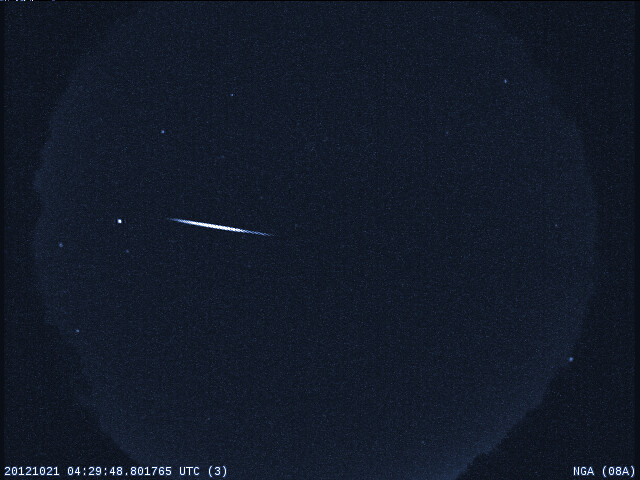
The shower takes its name from Orion, the constellation containing its apparent point of origin, called the radiant. However, Orion’s stars do not produce the meteors.
NASA places the radiant just north of the bright star Betelgeuse. Still, meteors can cross other parts of the sky, so watching a broad area works better than staring at one star.
For Northern Hemisphere observers, NASA suggests reclining with feet toward the southeast and looking upward.
Also, leave the telescope and binoculars inside. The American Meteor Society’s observing guidance recommends the unaided eye because optical equipment narrows the view.
Allow at least 20 to 30 minutes for your eyes to adjust. Afterward, avoid bright phone screens and unnecessary lights.
Finally, give the sky time. A clear, dark morning can reward an unhurried watch, even when the first few minutes produce no meteors.



You must be logged in to post a comment.