

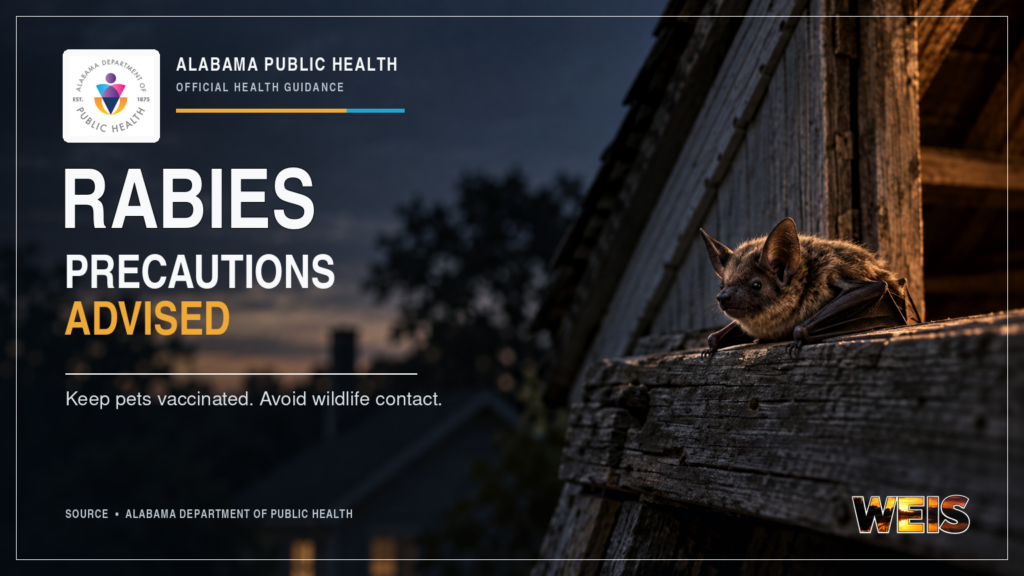
MONTGOMERY– The Alabama Department of Public Health is urging residents to recognize possible rabies exposure and take prompt action. The warning follows a recent Centers for Disease Control and Prevention report on increased exposures nationwide and post-exposure treatment.
ADPH says Alabama has seen more rabies cases involving domestic animals, including dogs and cats. The disease also continues to affect raccoons, foxes, bats, and other wildlife.
State Public Health Veterinarian Dee W. Jones said rabies is neither new nor emerging. However, rare human cases can cause people to underestimate its danger.
“The virus itself is not changing,” Jones said. Instead, domestic animals generally become infected when their rabies vaccinations are not current.
Jones said the increase involving dogs and cats is directly tied to overdue vaccinations. Therefore, recognizing a possible exposure and responding quickly remain critical because rabies is fatal.
Bats require extra caution when found in homes, college dormitories, nursing homes, or other living areas. People who were sleeping or cannot determine whether contact occurred may need an exposure evaluation.
In addition, one bat inside living quarters could require several people to be evaluated. Whenever possible, Jones said, residents should safely capture and secure the bat instead of releasing it.
ADPH advises people never to handle bats or other wildlife with bare hands. Residents should also avoid animals acting abnormally and teach children to report any bite, scratch, or contact with an unfamiliar animal immediately.
Keeping pets vaccinated creates an important barrier between rabies in wildlife and people. Pet owners should keep dogs, cats, and ferrets current and consult a veterinarian about other animals that may encounter wildlife.
Finally, anyone bitten or scratched by an animal should wash the affected area thoroughly with soap and water. The person should then seek medical attention.
RELATED ARTICLES:



You must be logged in to post a comment.