
CENTRE– Long before listeners could summon almost any song with a tap, enjoying an album required a small ritual.
You selected a record, eased it from its sleeve, placed it on a turntable, and carefully lowered the needle. A faint hiss or pop came first. Then the music filled the room.
National Vinyl Record Day, observed each Aug. 12, celebrates that experience. It also honors the technology, artwork, culture, and memories that grew around recorded music.
For those of us at WEIS Radio, the observance also celebrates a longtime partnership. Records gave radio much of its music, while radio introduced those records to generations of listeners.
An Observance Built Around Music and Memory
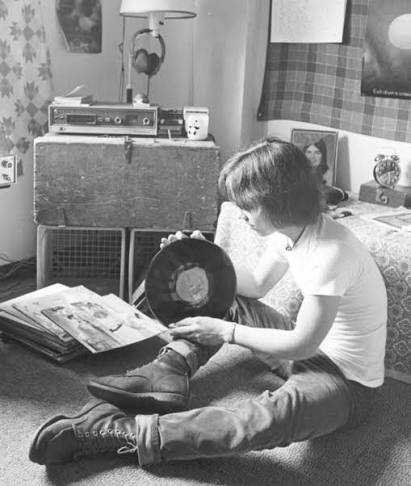
Music enthusiast and radio host Gary Freiberg organized the first Vinyl Record Day celebration in 2002.
That year, the San Luis Obispo County Board of Supervisors in California issued a proclamation recognizing Aug. 12 as Vinyl Record Day. The celebration featured records, vintage equipment, live music, DJs, and an exhibit of album-cover art.
Freiberg wanted the observance to preserve more than the records themselves. He also sought to recognize their cultural influence and the memories connected to them.
That distinction matters. A record is a physical object, but its meaning often comes from where it takes the listener.
One album can recall a first date. Another may bring back a family road trip, a high school dance, a favorite concert, or an afternoon spent listening to the radio.
The record becomes more than a carrier of music. It becomes a marker in someone’s life.
Why the Celebration Falls on Aug. 12
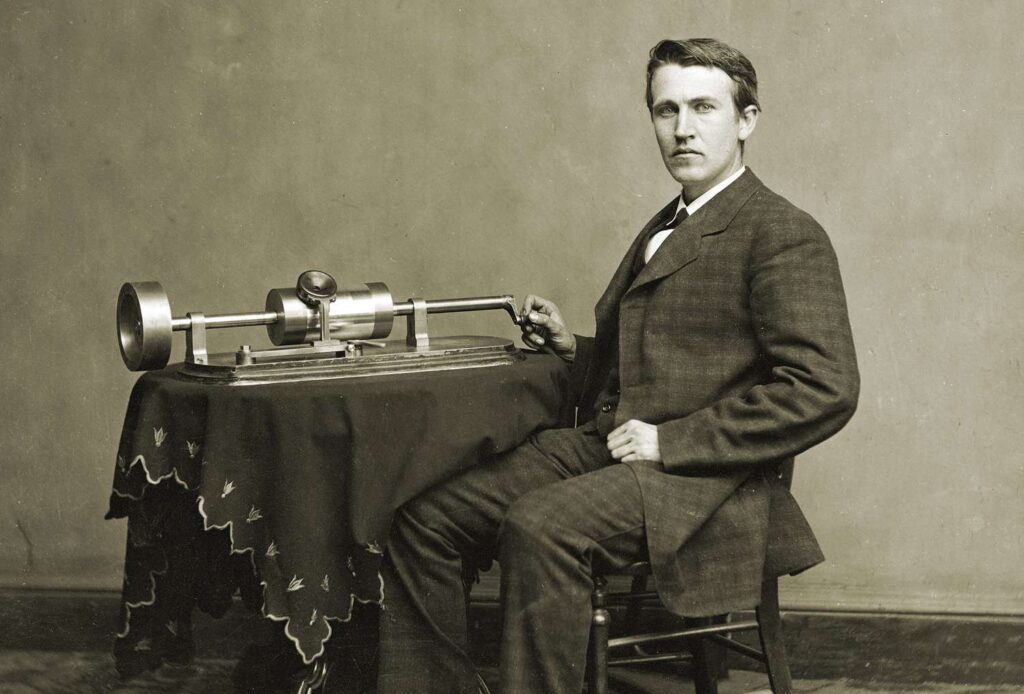
Organizers selected Aug. 12 because it is the traditional date associated with Thomas Edison’s completion of the phonograph in 1877.
However, the historical record contains some uncertainty.
The Library of Congress notes that historians once identified Aug. 12 as the date Edison completed the machine. Other evidence suggests his mechanic, John Kruesi, did not build the working model until December.
Edison applied for a patent on Dec. 24, 1877. The government issued that patent on Feb. 19, 1878.
Whatever the exact day, Edison’s achievement changed how people experienced sound. His phonograph became the first working machine that could both capture sound and play it back.
French inventor Édouard-Léon Scott de Martinville had recorded sound waves visually with his phonautograph in 1857. His machine traced vibrations but could not reproduce them for listeners.
Edison took the next great step. Sound no longer had to disappear the moment it was made.
From Tinfoil Cylinders to Flat Records
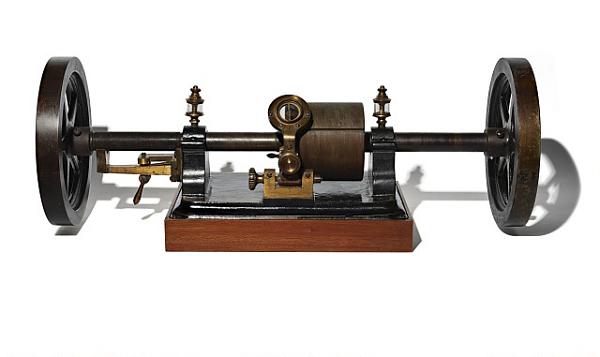
Edison’s first phonograph used tinfoil wrapped around a rotating cylinder. Sound waves moved a diaphragm and stylus, which pressed a pattern into the foil.
During playback, another stylus traced those marks. Its movement caused a diaphragm to vibrate and recreate a recognizable version of the original sound.
The early recordings were fragile and brief. Repeated playback quickly damaged the foil.
Inventors later adopted wax cylinders, which offered a more durable recording surface. Then German inventor Emile Berliner helped shift the industry toward the flat disc.
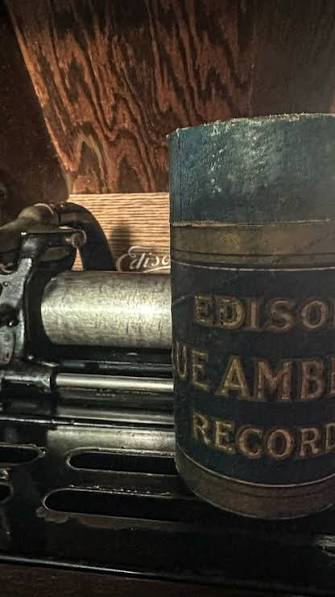
Berliner received a U.S. patent for his gramophone in 1887. His method used a side-to-side groove. A disc soon replaced the cylinder used in his early experiments.
Flat records proved easier to store, copy, label, and sell. By the early 1900s, they had gained the advantage in one of the recording industry’s first format battles.
The industry eventually settled on shellac records that commonly turned at 78 revolutions per minute. These “78s” generally held about three minutes of sound on each side.
That limit helped shape popular music. Songs needed to fit the available space.
How Music Lives Inside a Groove

A vinyl record stores an analog representation of sound in one long spiral groove.
During recording, sound vibrations become a physical pattern. A cutting stylus carves that changing pattern into a master disc.
During playback, the turntable rotates the record at a steady speed. The stylus follows the groove and responds to its tiny movements.
A cartridge converts those movements into an electrical signal. An amplifier strengthens the signal, and speakers turn it back into audible sound.
In a stereo record, the two walls of the groove carry information for the left and right channels. The entire performance rests inside variations too small to see clearly without magnification.
That physical process also explains familiar vinyl sounds. Dust, scratches, and damage can move the stylus in ways that were never part of the recording. The system reproduces those movements as pops, clicks, or noise.
The phrase “warm vinyl sound” remains subjective. The mastering, pressing quality, turntable, cartridge, speakers, and condition of the record all affect what a listener hears.
Still, many fans enjoy the gentle imperfections and the feeling of hearing sound produced through a physical process.
The LP Changed How Albums Were Made
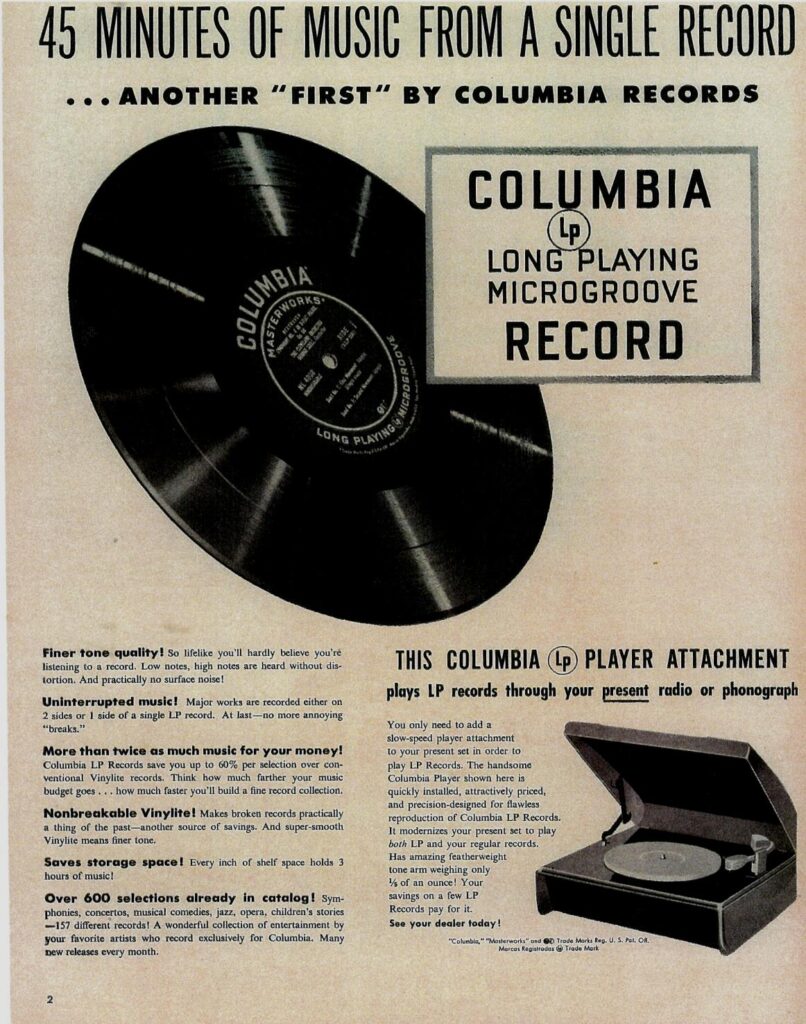
Another major change arrived in 1948. Columbia Records introduced the 12-inch long-playing record, better known as the LP.
The record turned at 33 1/3 revolutions per minute and could hold about 20 minutes of music on each side. That gave performers much more room than the older 78 format.
The LP allowed musicians to create longer works and arrange songs in a deliberate sequence. Classical performances could fit on fewer discs. Popular artists could build complete albums instead of releasing only short selections.
RCA Victor answered in 1949 with the 7-inch, 45-rpm record. The smaller disc became closely associated with singles, jukeboxes, and radio hits.
Consumers now had several choices: the older 78, the LP, and the 45. Each format found a place in homes, stores, and broadcast studios.
Records and Radio Grew Up Together
The Library of Congress recorded-sound timeline shows how closely radio and records developed.
Recorded transcriptions for syndicated radio programs appeared in 1928. Stations could receive programs on discs and play them for local audiences.
This proved especially valuable for smaller stations that could not produce every program live. It also helped shape the role of the disc jockey, who selected recordings and spoke between them.
By 1934, lacquer-coated blank discs made it practical to record broadcasts immediately. Networks and stations used large transcription discs to preserve or distribute programs.
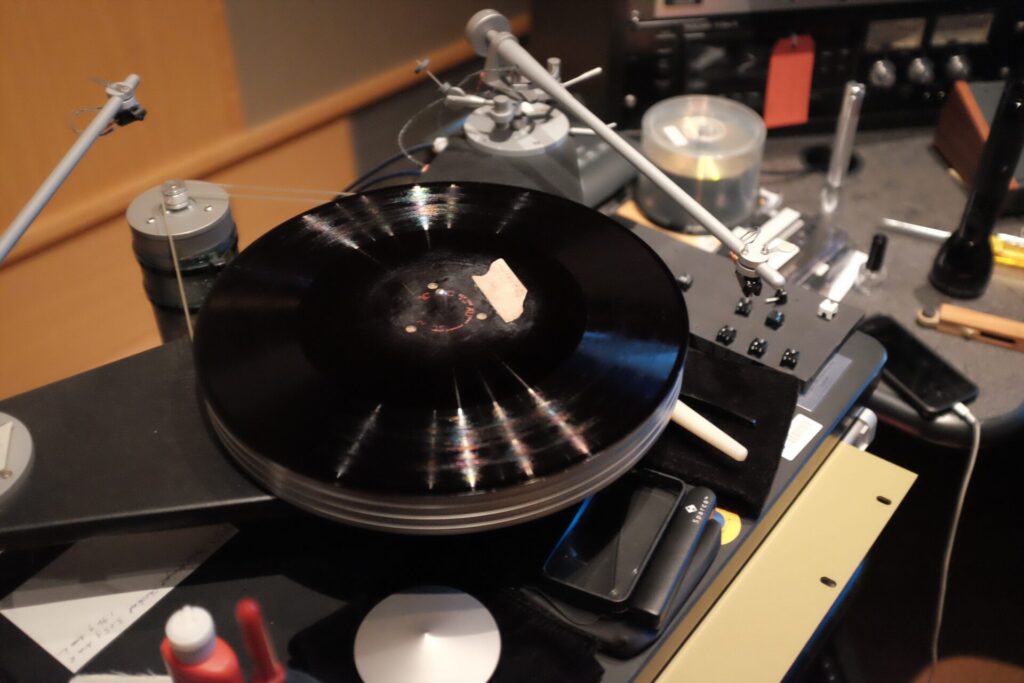
For decades, radio studios relied on shelves of records. Announcers selected a disc, placed it on a turntable, found the correct groove, and started it at the right moment.
The relationship worked in both directions. Record companies needed radio to introduce new songs. Stations needed records to bring artists and music into their communities.
A song played over the air could send listeners to a record store. The record then allowed them to take that music home.
Technology has changed, but the purpose remains familiar at WEIS. Radio still brings music and people together. A song can reach someone at work, at home, in a vehicle, or while traveling a quiet country road.
The listener may not see the equipment producing the sound. What matters is the connection created when the right song arrives at the right time.
Vinyl’s Comeback Is More Than Nostalgia
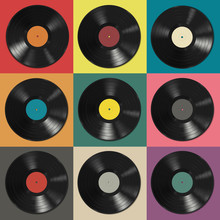
Compact discs entered the market in the early 1980s. Digital downloads and streaming followed, offering convenience that records could not match.
For a time, vinyl appeared headed toward history.
Instead, sales began climbing again. Collectors returned to the format, younger listeners discovered turntables, and artists began releasing new albums on vinyl.
The latest Recording Industry Association of America figures show the revival remains strong.
U.S. vinyl shipments reached 46.8 million units in 2025. That marked a 7.9% increase from the previous year.
Wholesale vinyl revenue rose 9.3% to more than $1.04 billion. The RIAA described 2025 as the format’s 19th consecutive year of growth.
Vinyl also led CDs by a wide margin. The industry shipped 29.5 million CDs, compared with 46.8 million vinyl records.
Streaming still dominates the recorded-music business. However, vinyl gives listeners something streaming cannot: a large album cover, liner notes, a physical collection, and a reason to hear an album from beginning to end.
The format asks for attention. A listener must select the record, lower the needle, and eventually turn the album over.
For many fans, that is part of the appeal.
Protecting a Record Collection
Records can last for generations when owners handle and store them properly.
The Library of Congress preservation guidance recommends holding records only by their edges or label areas. Touching the playing surface can leave behind oil and dirt.
Records should stand upright instead of lying in large stacks. They need support to prevent leaning and warping.
A collection should remain in a cool, dry, clean, and stable place. Attics, damp basements, direct sunlight, heaters, and air vents can damage records or their covers.
Owners should also keep playback equipment clean and maintained. A damaged or heavily worn stylus can harm a groove.
A Day to Let the Whole Record Play
National Vinyl Record Day offers a simple invitation: choose an album and listen.
Read the liner notes. Study the cover art. Notice the order of the songs. Let one side play without skipping, then turn the record over.
Collectors can also share the stories behind their favorite albums. Parents and grandparents can introduce younger family members to the music they once carried home from a record store.
Younger listeners may return the favor with a new release on vinyl.
The turntable may be old or new. The record may hold country, gospel, rock, blues, jazz, soul, classical music, or something harder to classify.
The important part is the listening.
A needle moves through a groove. A speaker moves the air. Somewhere, a memory begins turning again.



You must be logged in to post a comment.