

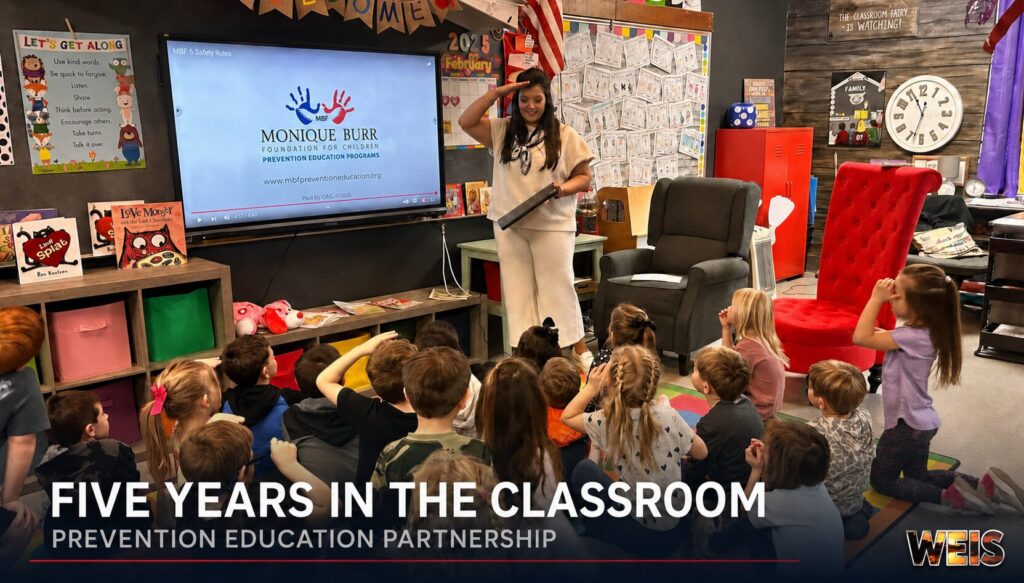
CHEROKEE COUNTY– The Children’s Advocacy Center of Cherokee County and Cherokee County Schools are continuing a partnership designed to give students the knowledge, confidence, and language needed to protect themselves and seek help.
The new school year marks the fifth year that Education Coordinator Courtney Carver has directed the center’s prevention program in local classrooms.
The Children’s Advocacy Center recently expressed its gratitude for the partnership and the opportunity to work directly with Cherokee County students.
“We are incredibly grateful for our partnership and for the lasting impact of our prevention program,” the center said.
While the anniversary recognizes five years of Carver’s classroom leadership, it also highlights a broader community effort. The partnership brings educators and child advocacy professionals together around a shared goal: reaching children before abuse or another dangerous situation occurs.
Five Years of Classroom Prevention
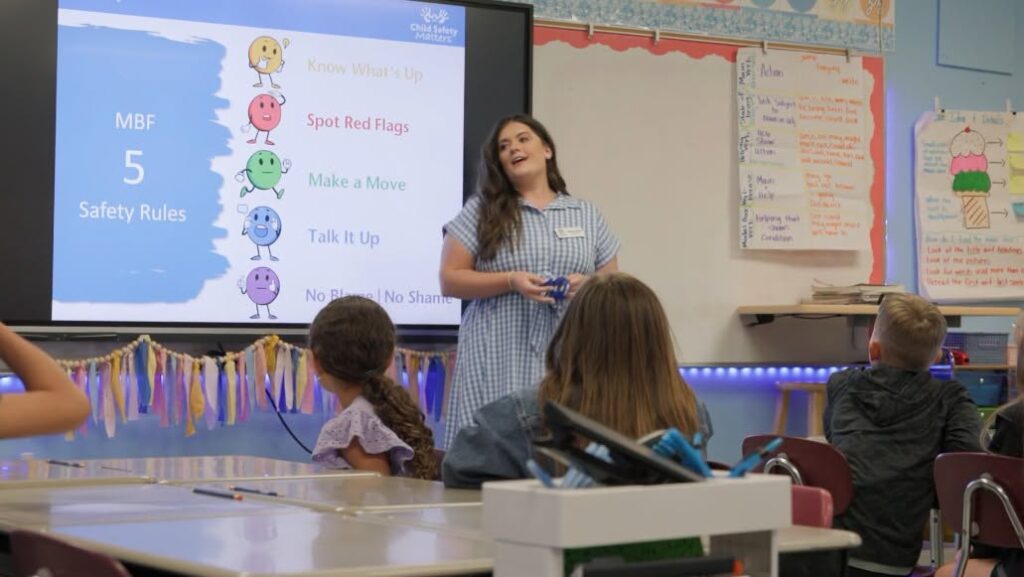
Carver leads lessons intended to help students understand their rights, recognize unsafe behavior, and identify adults they can trust.
The center described Carver as a talented and compassionate educator who brings dedication to every classroom she visits. More importantly, officials said she believes every child should understand that they have a voice.
That message sits at the heart of the prevention program. Students learn that their concerns matter and that they should speak with a trusted adult when something feels unsafe.
The lessons also reinforce that children are never responsible for abuse committed against them.
In May, the center reported providing 196 prevention-education sessions in Cherokee County classrooms during the preceding year. Officials credited Cherokee County Schools, the Alabama Department of Child Abuse and Neglect Prevention, and the Monique Burr Foundation for supporting that work. Previous WEIS coverage of the prevention program
Building Safety Around Five Rules
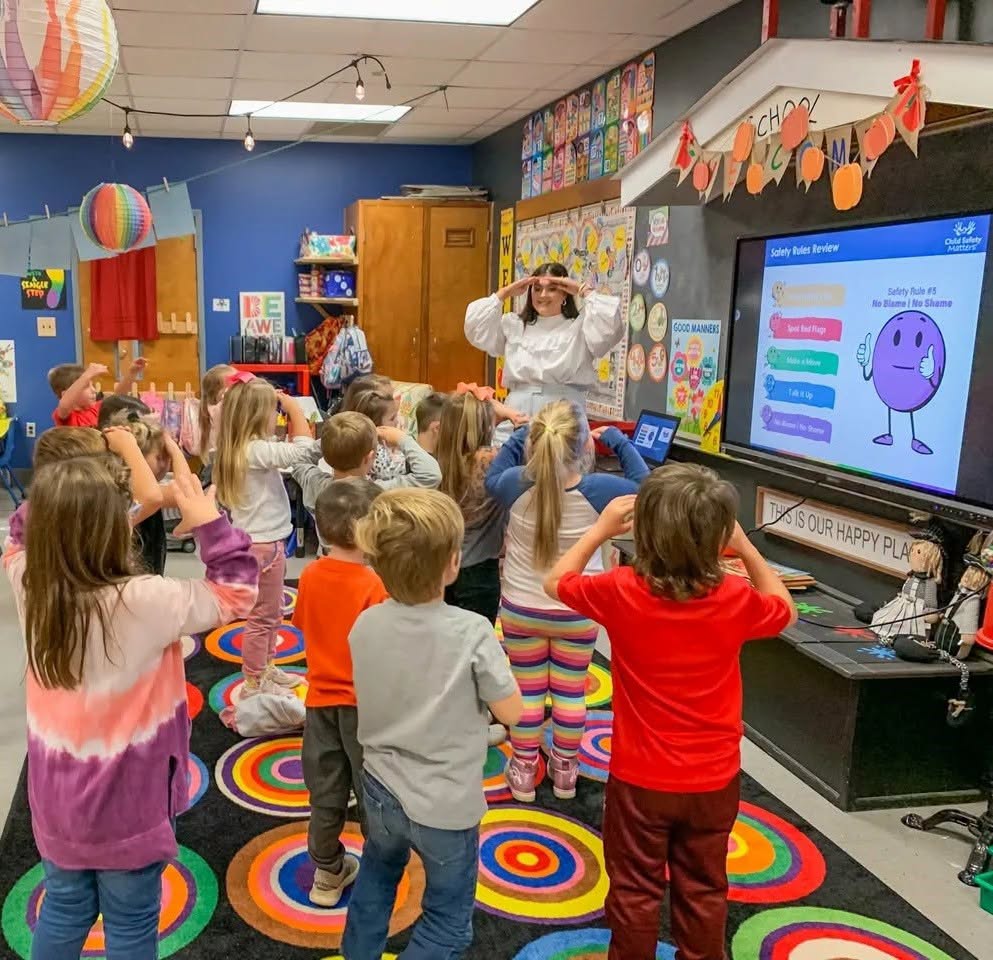
The classroom program uses age-appropriate material from the Monique Burr Foundation for Children. Its lessons address abuse, bullying, cyberbullying, exploitation, and dangers children may encounter online.
The curriculum centers on five safety rules that give children clear actions they can remember:
- Know What’s Up teaches students to remain aware of their surroundings, relationships, and online interactions.
- Spot Red Flags helps them recognize behavior or situations that may be unsafe or inappropriate.
- Make a Move encourages children to leave an unsafe situation, seek assistance, or help someone else when possible.
- Talk It Up teaches students to use their voice and report concerns to a trusted adult.
- No Blame, No Shame reminds children that abuse is never their fault and that it is never too late to ask for help.
The rules create a common language that students can use at school, at home, and in the community. They also give children practical steps to follow when they may not know how to explain what is happening.
Lessons change as children grow. Younger students learn about personal space, safe adults, boundaries, and warning signs. Older students receive information about healthy relationships, exploitation, peer-on-peer abuse, and digital safety. Monique Burr Foundation program information
A Partnership Focused on Prevention
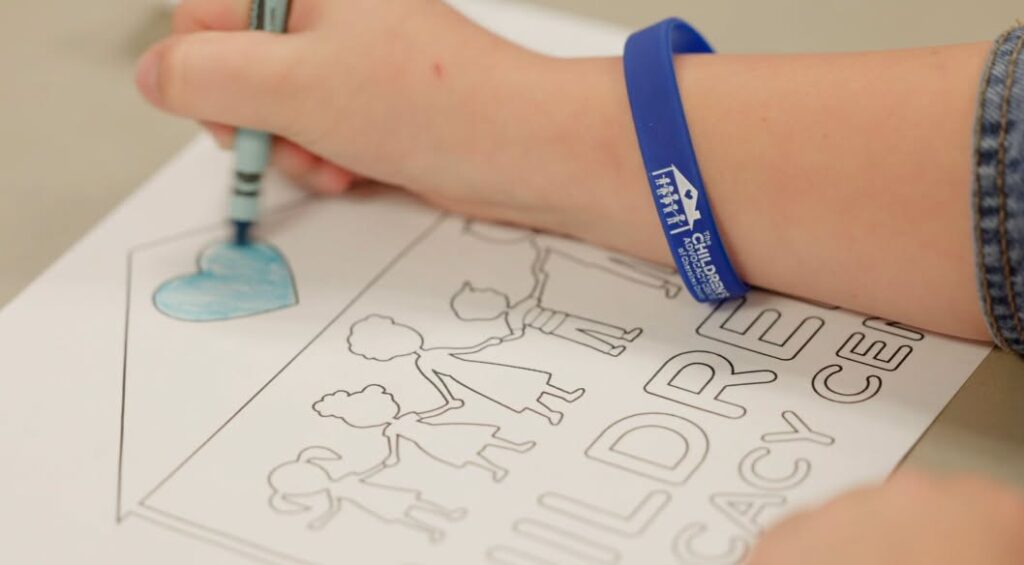
The partnership with Cherokee County Schools allows the center to place prevention education in a familiar setting where children already learn and build relationships with trusted adults.
The school system provides access to students throughout the county. Meanwhile, the Children’s Advocacy Center brings specialized knowledge about child abuse, victim advocacy, and appropriate responses when a child shares a concern.
That cooperation also supports the requirements of Alabama’s Erin’s Law. The law requires public schools to provide developmentally appropriate child sexual abuse prevention instruction.
State guidelines call for lessons that help students recognize abuse, reduce their vulnerability, and report concerns. The guidelines also address training for teachers, administrators, and other school employees who may receive a disclosure from a student. Alabama Erin’s Law guidelines
However, the center’s work goes beyond meeting a legal requirement. Its program is designed to make safety concepts part of an ongoing conversation rather than a single presentation.
Each classroom visit gives students another opportunity to hear that they have a voice. It also reminds them that trusted adults are available and ready to listen.
Intervention, Advocacy, and Education
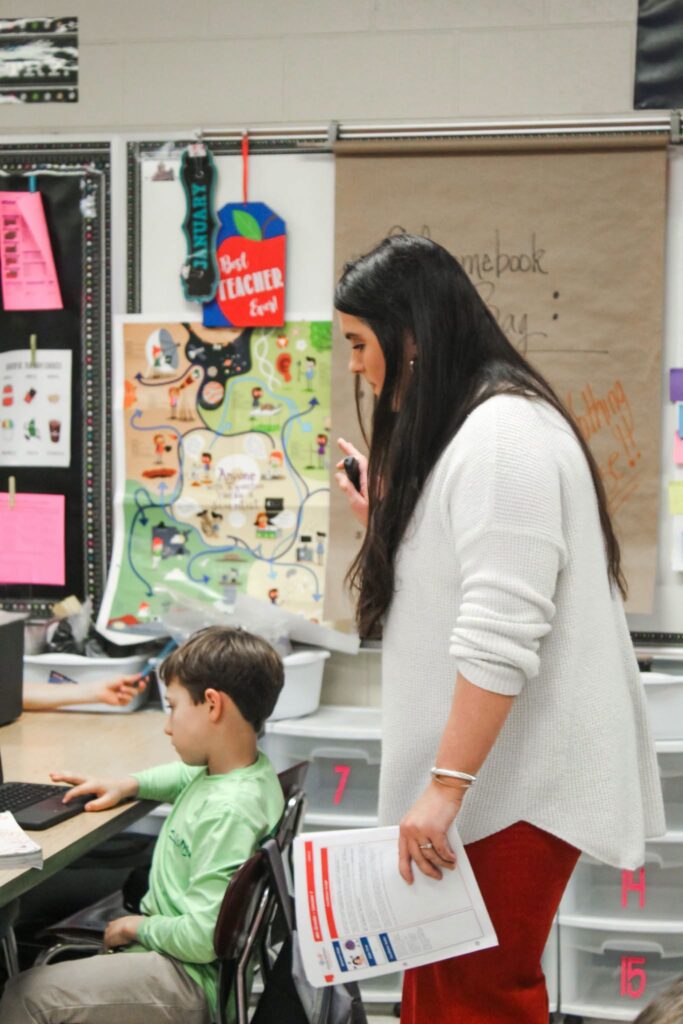
The prevention program represents one part of the Children’s Advocacy Center’s work in Cherokee County.
The center opened in 1999 after local leaders recognized that children involved in abuse investigations often had to repeat their experiences to several agencies. That process could create additional stress and trauma for children already facing a difficult situation.
The center provides a child-focused setting where trained professionals conduct forensic interviews. It also offers trauma-informed counseling, family advocacy, referrals, and coordinated support throughout an investigation.
Those services are provided at no cost to children and their non-offending family members. Children’s Advocacy Center mission and history
The center works with social workers, law enforcement officers, prosecutors, medical professionals, mental health providers, victim advocates, and court officials. That multidisciplinary approach allows agencies to share information while reducing the number of times a child must repeat an account of abuse.
While those services respond after a concern or allegation arises, the classroom program focuses on prevention. It seeks to give children knowledge before they face an unsafe situation.
One Classroom and One Conversation at a Time
Five years in the classroom have allowed Carver and the center to establish a consistent presence within Cherokee County Schools.
The lessons may last for a limited time, but the center hopes their message remains with students long after the presentation ends.
Children leave with recognizable safety rules, a better understanding of personal boundaries, and reassurance that speaking up is the right thing to do. Teachers also gain language they can reinforce throughout the school year.
The center summarized the partnership’s purpose with a simple message:
“Together, we are building safer communities—one classroom, one child, and one conversation at a time.”
RELATED ARTICLES:
Children’s Advocacy Center of Cherokee County Highlights Prevention Education Efforts in Local Schools
Children’s Advocacy Center Of Cherokee County Recognizes National Forensic Interviewers Week
Children’s Advocacy Center to Host Fourth Annual “Save Jane” Event


You must be logged in to post a comment.