

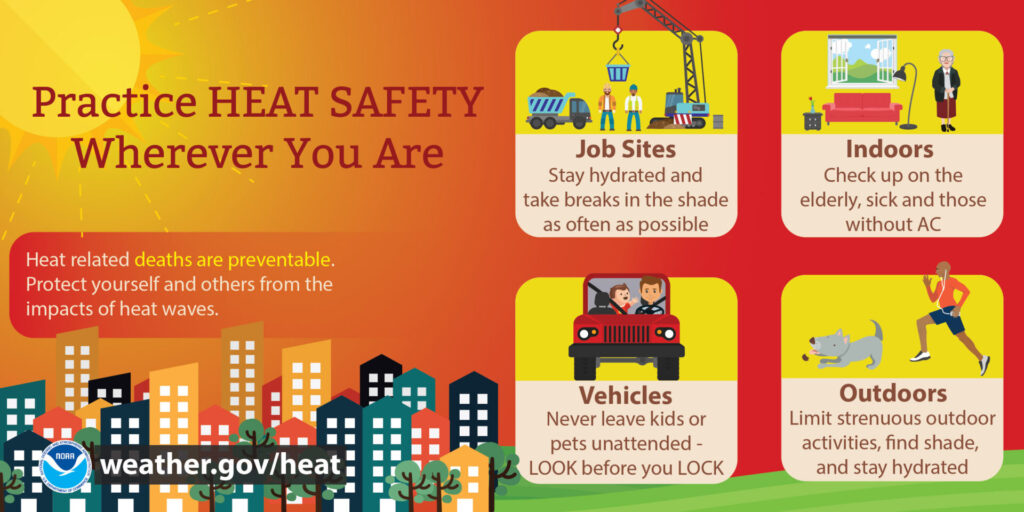
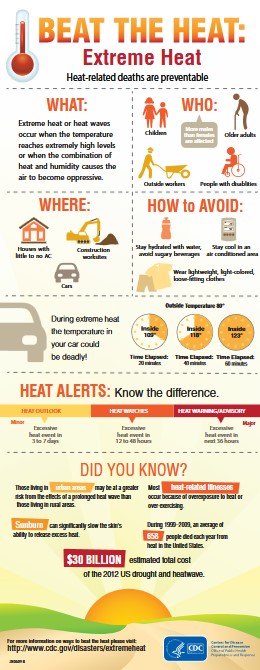
WEIS- As temperatures climb across Northeast Alabama and Northwest Georgia, health and emergency officials are reminding residents that extreme heat is one of the nation’s deadliest weather hazards. According to the National Weather Service, heat claims more lives on average than floods, tornadoes or hurricanes.
Health experts say preparation and awareness can help prevent most heat-related illnesses.
Stay Hydrated
The Centers for Disease Control and Prevention recommends drinking plenty of water throughout the day, even if you don’t feel thirsty. Waiting until you become thirsty can mean you’re already becoming dehydrated. Alcohol and drinks with large amounts of sugar can contribute to dehydration and should be limited during periods of extreme heat.
Limit Time Outdoors
If possible, schedule outdoor work and exercise during the early morning or late evening when temperatures are cooler. Wear lightweight, loose-fitting, light-colored clothing and take frequent breaks in the shade or an air-conditioned location.
For outdoor workers, OSHA emphasizes three simple words: Water. Rest. Shade. Employers are encouraged to provide plenty of drinking water, frequent rest breaks and shaded or cooled recovery areas, especially for new workers who have not yet adjusted to the heat.
Know the Signs of Heat Illness
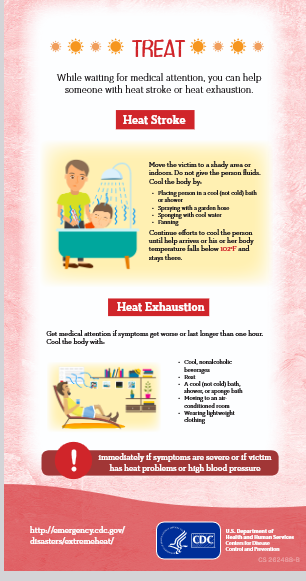
The CDC says symptoms of heat exhaustion include:
- Heavy sweating
- Weakness or fatigue
- Dizziness
- Nausea
- Muscle cramps
- Headache
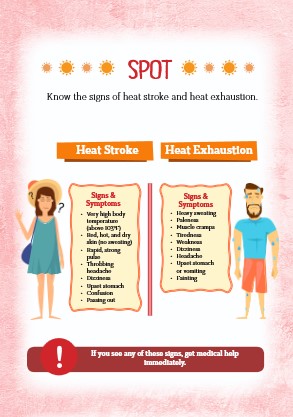
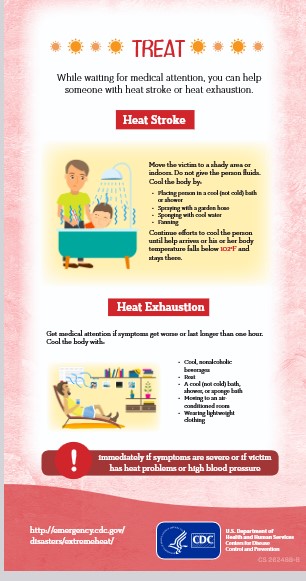
If someone becomes confused, loses consciousness, stops sweating, or has a very high body temperature, it may be heat stroke, a life-threatening emergency. Call 911 immediately while moving the person to a cooler location and beginning cooling measures.
Never Leave Children or Pets in a Vehicle
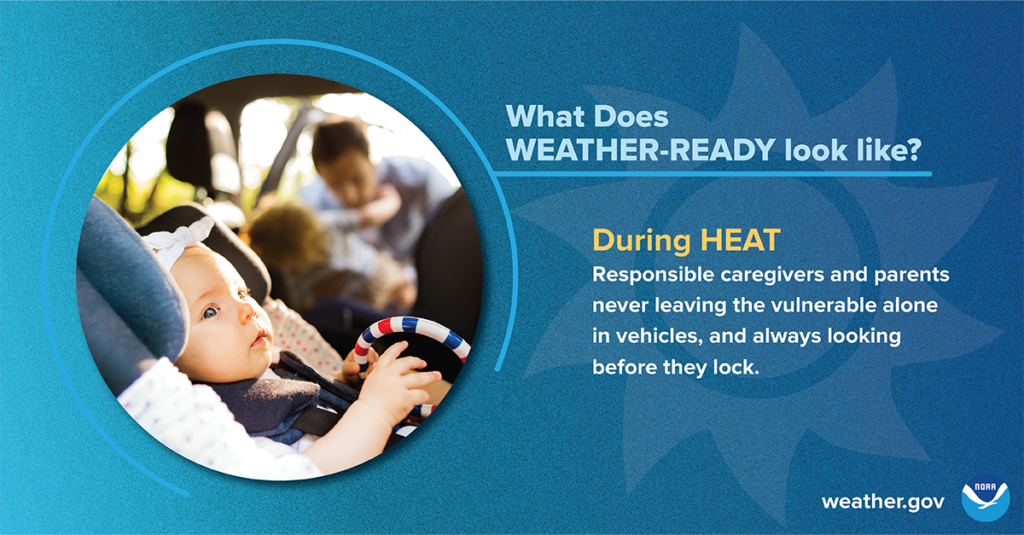
Even with the windows cracked, the temperature inside a parked vehicle can rise to dangerous levels within minutes.
The CDC and National Weather Service stress that children and pets should never be left unattended in a vehicle, even for a short period.
Protect Your Pets
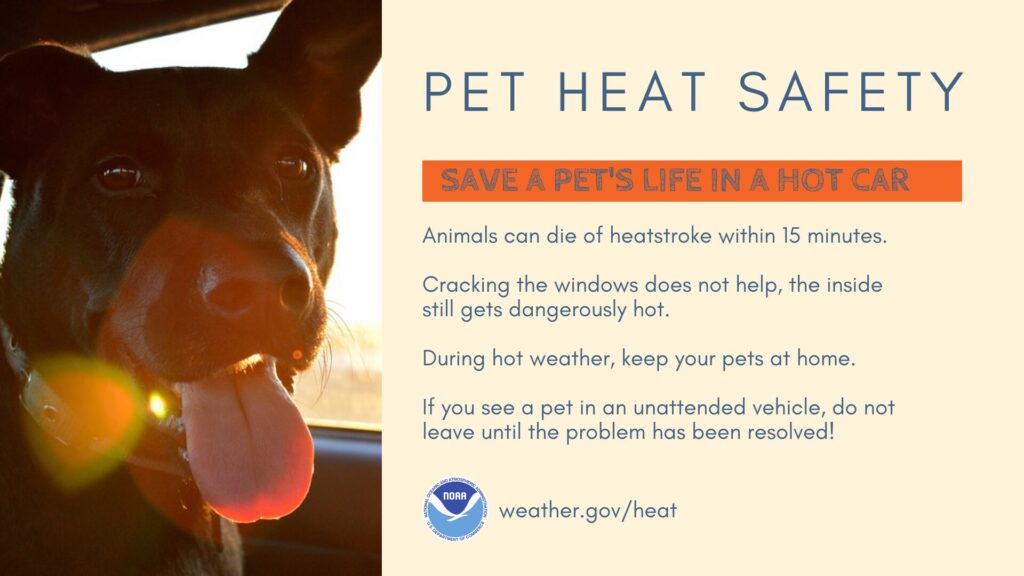
Veterinarians recommend ensuring pets always have access to fresh, cool water and shade. Walk dogs during the early morning or after sunset, since pavement can become hot enough to burn paw pads.
Pets should never be left outside for extended periods without shelter, and if the pavement feels too hot for your hand after several seconds, it is too hot for your pet’s feet.
Check on Others
Older adults, infants and young children, people with chronic medical conditions and those without access to air conditioning are at greater risk of heat-related illness.
The CDC encourages everyone to check on elderly neighbors, family members and others who may need assistance during periods of extreme heat.
Watch the Heat Index
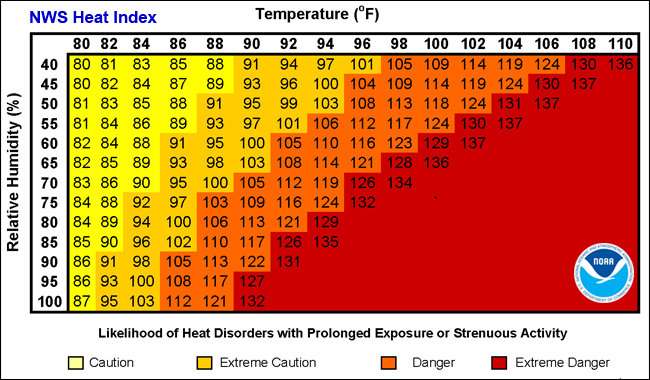
The National Weather Service reminds residents to pay attention not only to the air temperature but also to the heat index, which combines temperature and humidity to show how hot it actually feels. High humidity makes it harder for the body to cool itself, increasing the risk of heat-related illness.
Air Quality Matters Too
Hot weather can also increase ground-level ozone pollution. The CDC recommends people with asthma, COPD and other lung conditions monitor local air quality forecasts and reduce strenuous outdoor activity when air quality is poor.
Official Heat Safety Resources
Residents can find additional heat safety information from:
- Centers for Disease Control and Prevention (CDC)
- National Weather Service (NWS)
- OSHA Heat Safety Program
- Heat.gov, the federal government’s heat safety resource



You must be logged in to post a comment.