

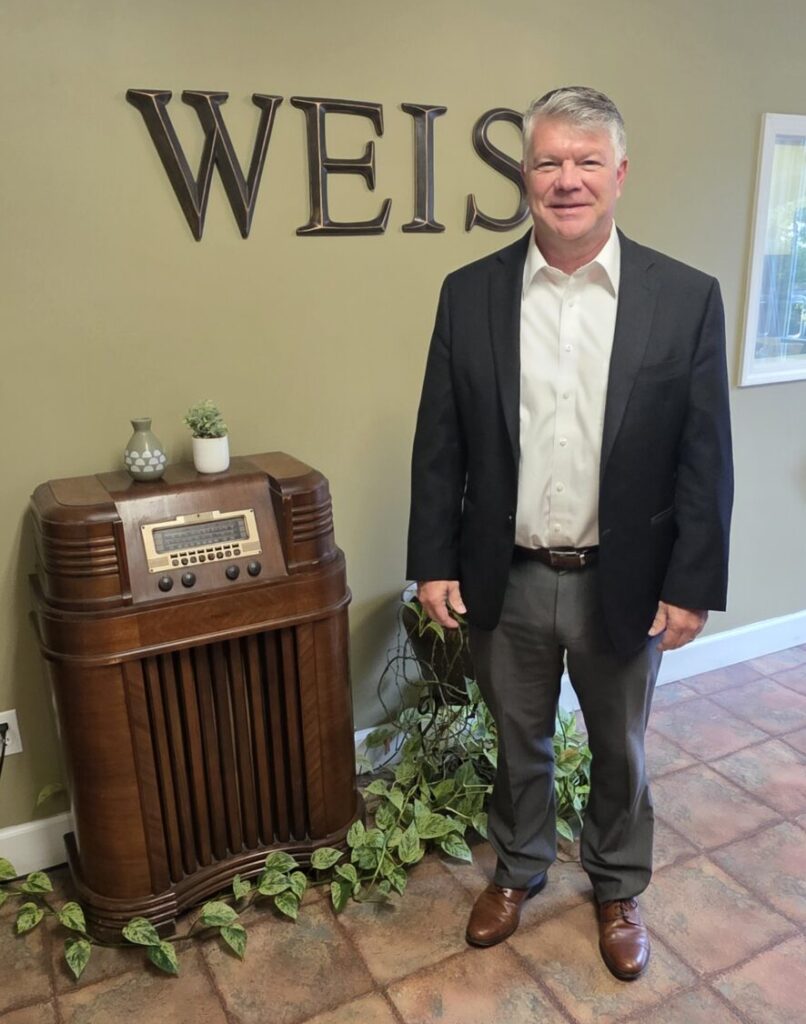
CHEROKEE COUNTY — Cherokee County Election Manager, Probate Judge, and Commission Chairman Tim Burgess joined Jerry Baker on the WEIS Radio Morning Show Monday, May 18, to discuss the upcoming Primary Election set for Tuesday, May 19, while providing voters with information on what to expect at the polls.
You can hear the interview here:
The May 19 election marks a milestone for Cherokee County, as it will be the first election conducted in the county’s new courthouse. During the discussion, Burgess reflected on how Alabama primary elections were traditionally held in June when schools were out of session, but have since been moved to May.
Burgess explained that Tuesday’s election is a partisan primary election for Democratic and Republican candidates, meaning voters will select a ballot based on political party affiliation for candidates who qualified to run within their respective parties. Independent and write-in candidates do not appear on primary ballots and instead are available only during general elections.
Locally, Burgess noted there are no county-level contested offices appearing on the ballot, as no challengers qualified to run against incumbents in Cherokee County races. The only race with local relevance is the Alabama Senate District 10 contest.
Polls across Cherokee County will open at 7 a.m. and remain open until 7 p.m. Burgess emphasized the importance of election workers and the responsibility they carry to ensure voting runs smoothly throughout the day.
Burgess acknowledged that technical issues can occasionally arise at polling locations, referencing a previous incident involving voting equipment at the ROC polling site where static electricity reportedly caused machines to jam. He expressed appreciation to voters for their patience during those disruptions and encouraged continued understanding if unforeseen problems occur during the election process. He also praised local poll workers for their dedication, noting many spend long hours serving their communities for minimal compensation because of their commitment to civic participation.
Burgess also urged voters to remember that frustrations related to politics, candidates, or broader societal concerns should not be directed toward poll workers, who are present to assist voters and ensure elections are conducted properly.
As required under Alabama law, voters will be asked to present valid photo identification before casting a ballot. Common forms of identification include an Alabama driver’s license, passport, military identification, federal government identification, or approved student identification.
For voters with expired Alabama-issued identification, Burgess explained there is a 60-day grace period during which expired Alabama IDs remain acceptable for voting purposes. However, recently relocated voters using expired out-of-state identification may encounter additional requirements.
Individuals who arrive without valid identification or forget to bring it may still cast a provisional ballot. Those ballots are reviewed by the Board of Registrars to verify voter eligibility before being counted. Voters who cast provisional ballots due to missing identification have until 4:30 p.m. Friday to provide acceptable ID to election officials.
After checking in and presenting identification, voters will be asked whether they wish to vote using a Democratic or Republican ballot. Election workers will then issue the selected ballot.
Burgess explained that voters who accidentally request the wrong party ballot or change their minds before voting should notify a poll worker, who can void the original ballot and provide a replacement. He also reminded voters they are not required to vote in every race or on every item appearing on the ballot. Blank selections will not invalidate votes cast in other contests, although voting machines may ask voters to confirm skipped races before submission.
Once completed, ballots are inserted into the tabulation machine, officially recording the vote.
Election workers will be available throughout the process to help voters navigate the system and answer procedural questions, while remaining prohibited from influencing how anyone votes.
Two statewide constitutional amendments also appear on Tuesday’s ballot.
The first amendment stems from Senate Bill 118, sponsored by Sen. Will Barfoot during a previous legislative session. The proposal would expand judicial authority to deny bail in additional criminal cases, building upon authority voters approved under Aniah’s Law in 2022. Current law permits judges to deny bail after a detention hearing for defendants accused of certain violent crimes, including murder, kidnapping, and rape. The proposed amendment would expand that list to include offenses such as solicitation, conspiracy, or attempted murder, as well as discharging a firearm into an occupied dwelling or vehicle.
The second amendment concerns compensation rules for elected district attorneys. The measure would align regulations governing district attorneys’ salaries more closely with those already in place for elected judges and prohibit reductions in district attorney compensation during their term in office.
For voters interested only in deciding the constitutional amendments and not candidate races, Burgess explained that amendment-only ballots are available upon request. The amendments also appear on both Democratic and Republican ballots, meaning voters only need an amendment-only ballot if they do not intend to participate in candidate races.
Burgess also reminded voters of Alabama’s rules regarding crossover voting in primary elections. Under state law, voters who participate in one party’s primary are expected to remain with that same party should a runoff election occur. However, voters who cast only an amendment ballot retain the option to participate in either party’s runoff if one becomes necessary.
Election officials are also encouraging residents to vote at their designated precincts, as state law requires voters to cast ballots in the precinct assigned to them. Burgess noted arriving at the wrong polling place can create confusion and delays.
Addressing election technology, Burgess discussed the county’s DS200 tabulation machines, emphasizing that voting equipment does not track voter identities or connect ballots to individual voters. Cherokee County also offers ExpressVote ballot-marking devices to assist voters who may have difficulty reading or marking ballots independently. The machines can enlarge text, provide audio assistance, and print completed ballots for submission. Election officials said the systems are not connected to the internet or to one another.
Closing the interview, Burgess expressed appreciation to Jerry Baker and WEIS Radio for their longstanding service to the community, including Baker’s role during the courthouse dedication ceremony. He also encouraged residents to exercise their right to vote, emphasizing the importance of civic participation and recognizing the sacrifices made throughout history to preserve that opportunity.
Residents seeking more election information are encouraged to contact local election officials or visit their designated polling location Tuesday between 7 a.m. and 7 p.m.

You must be logged in to post a comment.