

(NEW YORK) — President Donald Trump has repeatedly touted the opportunity for U.S. companies to extract and sell oil from Venezuela, which holds the largest oil reserves in the world.
“We’re going to be taking out a tremendous amount of wealth out of the ground,” Trump said on Saturday, just hours after a U.S. military attack removed Venezuela President Nicolas Maduro.
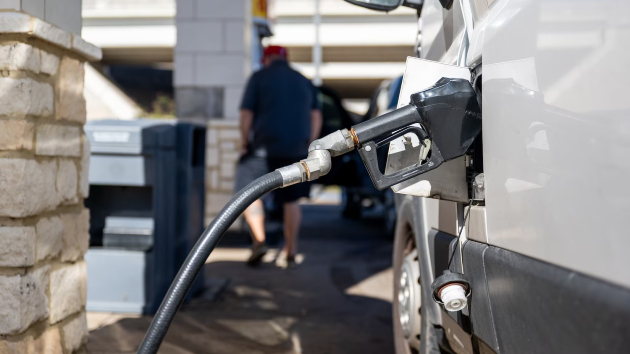
Venezuelan oil, however, will likely provide little relief for gas prices paid by Americans over the coming months, analysts told ABC News. They cited the relatively small amount of oil at stake in the near term and the glut of crude already flooding global markets.
A more substantial amount of oil could be accessed over the coming years, leading to a potentially noticeable decline in prices at the pump, they added. But that outcome remains uncertain, since oil companies face significant political and logistical hurdles in Venezuela, while wider market conditions could shift in the meantime.
“I would not expect to see a sharp drop because of this event,” Richard Joswick, head of near-term oil analysis at S&P Global Commodity Insights, told ABC News.
Oil executives are set to meet with President Donald Trump at the White House on Friday to discuss investments in Venezuela, a White House official confirmed to ABC News.
Venezuela boasts the biggest proven oil reserve of any country, amounting to roughly 303 billion barrels or about 17% of the world’s reserves, according to the U.S. Energy Information Administration, or EIA, a federal agency.
For decades, however, the nation has struggled to match those holdings with similarly stratospheric output due to lackluster infrastructure and government mismanagement.
Venezuela exported about 749,000 barrels per day last year, totaling less than 1% of global supply, according to data and analytics company Kpler.
In a social media post on Tuesday, Trump said Venezuela would hand over 30 to 50 million barrels of oil to the U.S., which in turn would sell them at their market price. The resulting funds — as much as $2.8 billion at current prices — will “benefit the people of Venezuela and the United States,” Trump said.
Trump has not provided details about the timing of such sales.
The plan proposed Tuesday would likely have little or no effect on U.S. gasoline prices, analysts told ABC News. The amount of oil stipulated by Trump is relatively small, making up the equivalent of between one-third and half of the oil consumed worldwide in a single day, according to data compiled by the EIA.
“Short term, I don’t think we’ll see much of an impact,” Tucker Balch, a finance professor at Emory University, told ABC News. “It’s not a lot of oil right now.”
Even more, oil prices are hovering near their lowest levels since 2021, meaning it will prove difficult to bring prices down further anytime soon, analysts added. Low oil prices stem from a glut of oil alongside relatively slow global economic growth, which has constricted demand for fossil fuels.
“There’s an oversupply and weak demand. More crude won’t make a big difference in the overall price,” Ramanan Krishnamoorti, a professor of petroleum engineering at the University of Houston, told ABC News.
After the military operation, Trump outlined a long-term role for U.S. oil companies in Venezuela, saying the firms would spend money to improve the nation’s infrastructure and output.
“We’re going to have our very large United States oil companies — the biggest anywhere in the world — go in, spend billions of dollars, fix the badly broken infrastructure, the oil infrastructure,” Trump said during a press conference on Saturday at his Mar-a-Lago residence in Palm Beach, Florida.
A U.S.-led effort to extract and sell the massive Venezuelan oil reserves could inject a substantial amount of oil into global markets and noticeably reduce gasoline prices, some analysts said.
Venezuelan oil production topped out at 3.5 million barrels per day in the 1990s, Kpler said. A return to that output would amount to about 4% of global oil supply, S&P’s Joswick, adding that the influx could push down gasoline prices.
“Prices are set on the margin and small imbalances in volume can lead to large shifts in prices,” Joswick said.
A long-term venture would encounter challenges, however, some analysts said.
The infrastructure necessary to ramp up oil production would require tens of billions of dollars of investment over several years, while oil companies involved in the effort would face political risks, according to analysts.
Chevron is currently the only U.S. oil firm operating in Venezuela, as part of a joint venture with the country’s state-owned oil outfit.
ExxonMobil and ConocoPhillips stopped doing business in Venezuela in 2007, after former President Hugo Chavez nationalized the sector. Citing the unlawful seizure of assets belonging to the two oil giants, the World Bank’s International Center for Settlement of Investment ordered Venezuela to pay the firms billions of dollars. Venezuela has only paid a small share of the debt it owes to ExxonMobil and ConocoPhillips.
The policy approach in Venezuela is uncertain over the coming years, while the same goes for the U.S. as a presidential election approaches in 2028, Krishnamoorti said.
“It’s unlikely the oil companies are going to take the bait to go after some significantly difficult oil to produce in a very uncertain U.S. policy and global policy situation,” Krishnamoorti added.
Joswick noted, however, that possible success in accessing Venezuelan oil over the next few years could be a “big incentive for the continuation of similar policies.”
While touting potential U.S. oil interests in Venezuela, the Trump administration has described the operation as a law enforcement function rather than a military attack.
Maduro and his wife, Cilia Flores, are among six defendants named in a four-count superseding indictment that accused them of conspiring with violent, dangerous drug traffickers for the last 25 years. Maduro was indicted on related charges in 2020. He has long denied all the allegations, and he pleaded not guilty on Monday. Flores also pleaded not guilty.
So far, the major oil firms have yet to speak publicly about Trump’s plans.
In a previous statement to ABC News, ConocoPhillips said the firm is keeping tabs on the ongoing situation.
“ConocoPhillips is monitoring developments in Venezuela and their potential implications for global energy supply and stability. It would be premature to speculate on any future business activities or investments,” the company said.
Chevron said it continues to focus on its current operations.
“Chevron remains focused on the safety and wellbeing of our employees, as well as the integrity of our assets. We continue to operate in full compliance with all relevant laws and regulations,” it said in a statement.
ExxonMobil did not respond to a request for comment.
ABC News’ Mary Bruce contributed to this report.
Copyright © 2026, ABC Audio. All rights reserved.